Photo: Clay House Photography

Thirteen Indianapolis-area wedding venues allow outside catering, and they fall into two groups: venues open to any licensed caterer, and venues with a preferred list you can leave for a fee. Almost none of them let you bring your own alcohol. That split is the thing couples miss, and it is what this guide sorts out.
I run 24 Shelby, an 1898 bottling house in downtown Indianapolis and the only surviving pre-Prohibition brewery building in the city. We let couples hire whatever caterer they want. So I field this question constantly, and I have watched couples tour four venues before anyone told them that “outside catering welcome” and “bring your own bar” are completely different promises. Every policy below was read off each venue’s own website in August 2026, not off a directory.
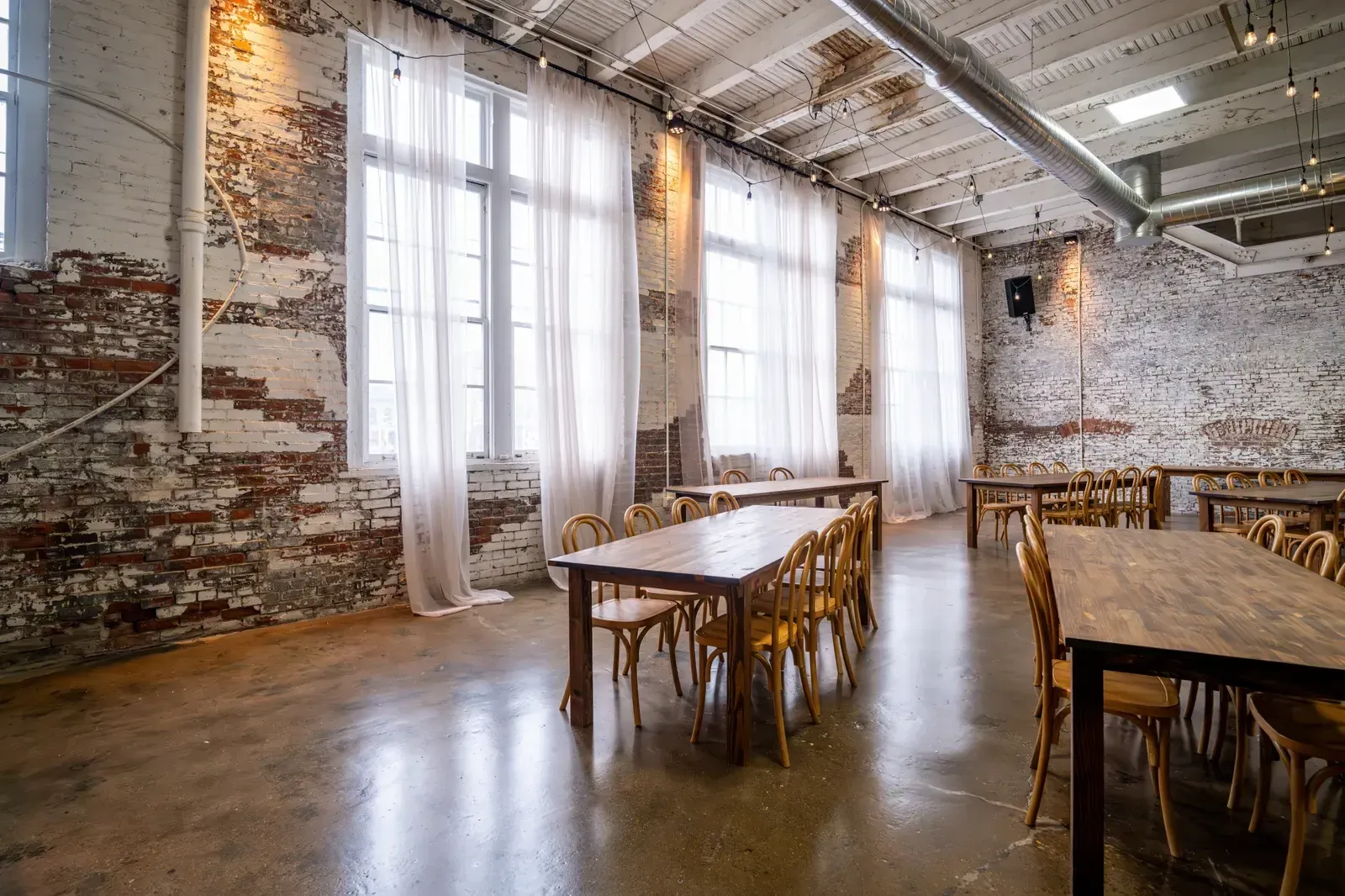 Photo: Clay House Photography
Which Indianapolis Wedding Venues Allow Outside Catering?
Thirteen venues in and around Indianapolis let you bring a caterer of your own. Eight are fully open to any licensed caterer. Five run a preferred list you can leave, usually with approval and a fee. Every one of them controls alcohol in some form, so read the bar column as carefully as the catering column.
| Venue | Outside caterer? | Bar rule | Kitchen |
|---|---|---|---|
| 24 Shelby | Open, any licensed | In-house required | Prep kitchen |
| McGowan Hall | Open, no list | In-house required | None usable |
| INDUSTRY | Open, licensed | In-house required | Prep kitchenette |
| Radius | Open, no markup | In-house offered | Kitchenette |
| BASH | Open, licensed | In-house required | Kitchenette |
| West Market | Open, self-catering OK | Licensed vendor | Prep area, cooler |
| Irvington Lodge | Open, no added fee | Licensed bar vendor | Warming prep area |
| Harris Glen | Open, certified only | Two named vendors | Warming kitchen |
| Community Life Center | Preferred, off-list fee | In-house required | Prep kitchen |
| Laurel Hall | Preferred, off-list fee | Approved caterer | Not published |
| VisionLoft Stutz | Preferred, on request | Venue-hired bartender | Not published |
| VisionLoft Mass Ave | Preferred, on request | Venue-hired bartender | Not published |
| The Heirloom | Preferred, terms unclear | In-house | Not published |
Geographically these spread across the city. 24 Shelby sits in Bates-Hendricks on the Fountain Square edge, McGowan Hall and Indiana Landmarks are Old Northside, INDUSTRY and Radius are near Lucas Oil Stadium, West Market is in the Mile Square, both VisionLofts are downtown at the Stutz and off Mass Ave, The Heirloom is south downtown, Community Life Center is far east side, Irvington Lodge is in Irvington, and BASH and Harris Glen sit in Carmel and Mooresville.
Capacity is not in that table on purpose, because capacity is the wrong first filter here. If your caterer cannot get in the door, the guest count never matters. The full Indianapolis venue guide covers capacity, style, and neighborhood across the whole market.
Two venues that show up constantly in local recommendations are missing, deliberately. Neidhammer has no working website any more, so nothing about its policy can be confirmed. Ivory Foundry publishes two live pages that contradict each other, one offering “the licensed caterer of your choice” and a newer one describing all-inclusive packages. Call both before you count on either.
What Do Open Vendor, Preferred List, and Exclusive Actually Mean?
Three models cover nearly every venue. Open vendor means you hire anyone licensed and insured. Preferred list means the venue recommends a group and lets you go elsewhere, often for a fee. Exclusive or approved-list means the venue picks, and there is no way around it. The words get used loosely, so ask which one applies in writing.
That is the whole taxonomy, and I am keeping it short here on purpose because the Indianapolis wedding catering guide already walks the three models in detail alongside Marion County permits and the bar-policy mechanics. What that guide does not do, and what nobody in this market publishes, is tell you which specific venues sit in which bucket. That is this page.
One warning about vocabulary. “BYOB” and “outside catering” get treated as the same thing in forum threads and even in some venue marketing. They are not. Outside catering is about food. BYOB is about alcohol, and in Indianapolis the answer to BYOB is essentially always no.
 Photo: Clay House Photography
Why Do Indianapolis Venues Let You Pick the Caterer but Not the Bar?
Because food and alcohol sit under different laws. Marion County licenses caterers through the health department, and any licensed caterer can work almost anywhere. Alcohol runs through the Indiana Alcohol and Tobacco Commission, and the permit attaches to whoever pours. Venues that hold a liquor license will not hand that risk to a stranger.
The state is direct about it. A host who wants to dispense beer or wine at a one-time event has to obtain a temporary permit first, and anyone who wants liquor served has to hire a licensed alcoholic beverage caterer (Indiana ATC, 2026). Temporary beer and wine permits have to be filed at least five business days out, and local law enforcement signs off before the state does.
Tinker House Events puts the reasoning on its own FAQ page more plainly than most: because the venue holds the liquor license, all alcohol and bar staff come through its in-house program. That is the honest version. It is not a money grab, it is whose name is on the permit.
This is the part I feel strongly about, because it is my team on the line. My bartenders’ licenses are the thing at risk when somebody’s uncle brings a flask, and I am not going to ask them to carry that. We card, we cut people off, and I back them every time.
According to Sarah Conrad, Managing Partner at 24 Shelby, “I bartended in this city for fifteen years before I ran a venue. I will hand you the keys on food. I will never hand you the keys on liquor, because it is my bartenders’ licenses on the line, not yours.”
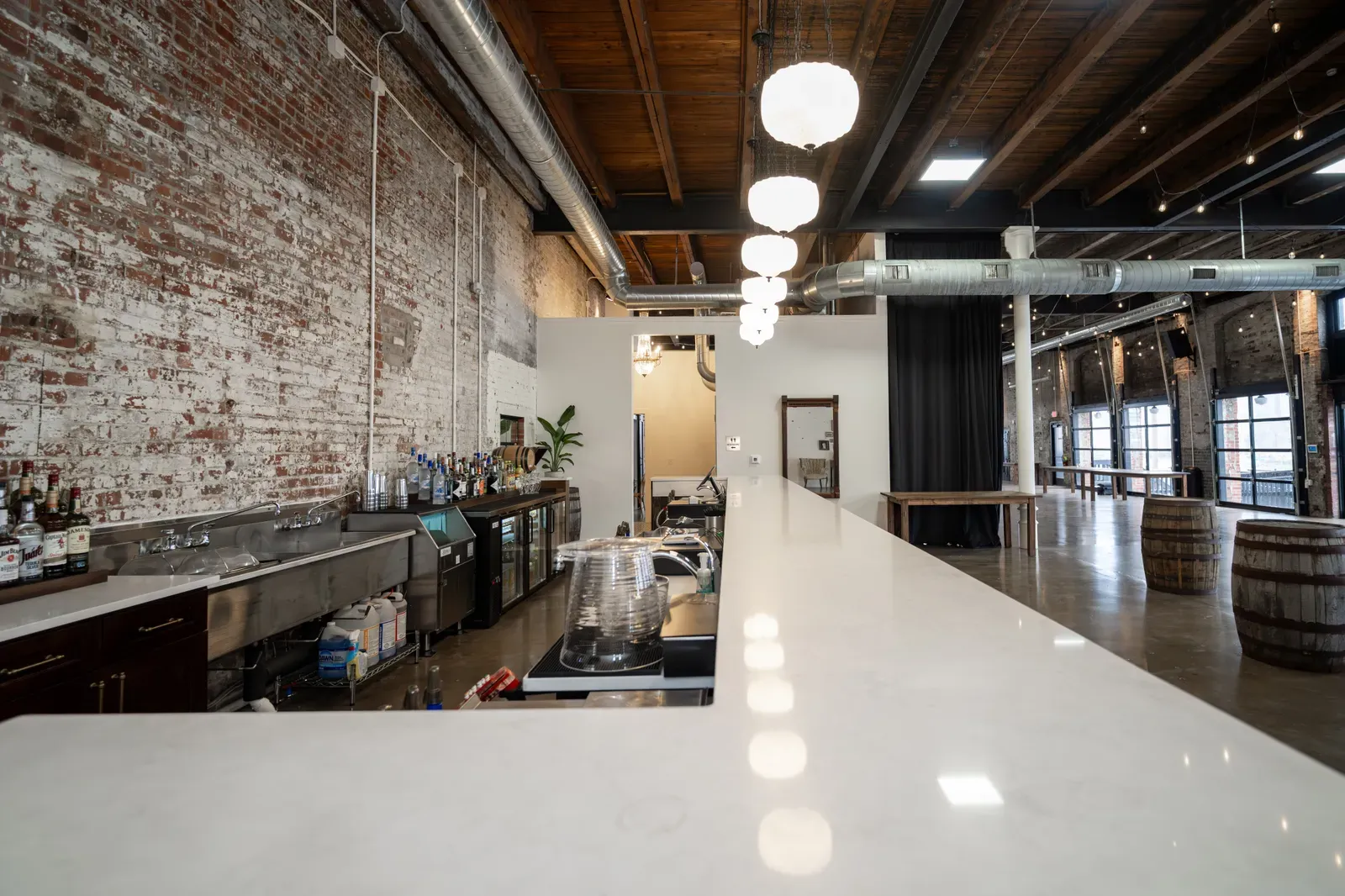 Photo: Clay House Photography
So when a venue says “open vendor,” ask the follow-up: open for what? At INDUSTRY, BASH, McGowan Hall, Community Life Center, and 24 Shelby, the answer is food only. At West Market Conference Center and Irvington Lodge Events, you can bring an alcohol vendor, but it has to be a licensed operation with the right permit, not you and a cooler. Harris Glen narrows it further and names the only two bar companies it works with.
Worth knowing before you tour: INDUSTRY’s own site describes its bar rule two different ways, one page saying the venue must supply all alcohol and another saying you buy and bring the spirits. Ask them directly rather than trusting either page.
Which Indianapolis Wedding Venues Have No Catering Minimum?
McGowan Hall, both VisionLoft locations, Irvington Lodge Events, Indiana Landmarks Center, and 24 Shelby publish no food-and-beverage minimum on catering. A minimum is a floor on spend, so removing it matters most for smaller guest counts, where a minimum written for 200 people quietly forces you to buy food nobody eats.
McGowan Hall states it flatly on its own site: outside caterers permitted, no food and beverage minimums. Indiana Landmarks Center goes further and says in its rental terms that it does not require food and beverage minimums as a condition of renting, even though it runs a closed caterer list. VisionLoft points out that most venues carry a minimum catering fee and that it does not.
At 24 Shelby there is no minimum on catering because we do not sell the food. We do sell the bar, and that is priced by package. Those are different levers, and I would rather say so than bury it.
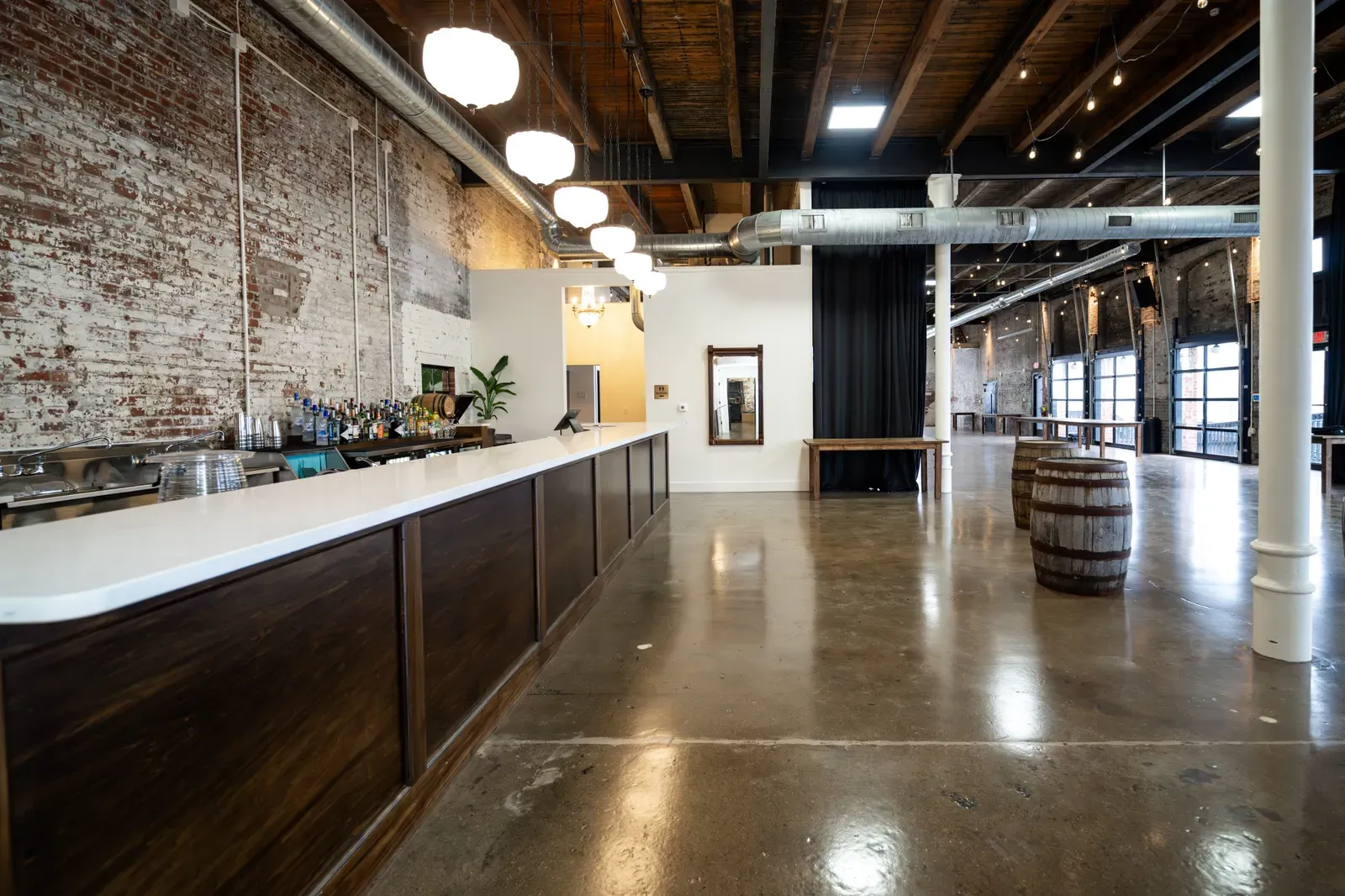 Photo: Clay House Photography
The minimum is also where the real money hides, more than the rental line ever does. The hidden costs of wedding venues breaks down where the rest of it sits.
How Do You Read a Preferred Vendor Clause and an Off-List Fee?
Search the contract for six phrases: outside vendor fee, off-list fee, buyout, facility use fee, kitchen fee, and food-and-beverage minimum. They are the same idea under different names. If a venue has a preferred list, the only question that matters is what leaving it costs and whether that cost is written down.
Here is what that looks like in this market, in the venues’ own words. Laurel Hall says that if you choose a caterer not on its list, an additional charge will be incurred, and does not publish the amount. Community Life Center stacks two charges: a per-guest surcharge for using an outside caterer, plus a kitchen access fee the caterer pays directly, and requires proof of catering license and liability insurance thirty days out. Harris Glen does not charge to bring your own caterer, but charges an upcharge if the caterer only drops food off and the venue has to staff the service.
Then there are the vaguer ones. The Heirloom’s FAQ answers “Can I bring in my own caterer?” with Crystal Signature Events being the preferred caterer, followed by “Ask about our open vendor policy,” and never states the terms. That is not a policy, it is an invitation to negotiate. Fine, as long as you know that going in and get the answer in writing before you sign.
A preferred list with a large enough fee attached is functionally an exclusive list for most budgets. The number decides which it is, so make them give you the number.
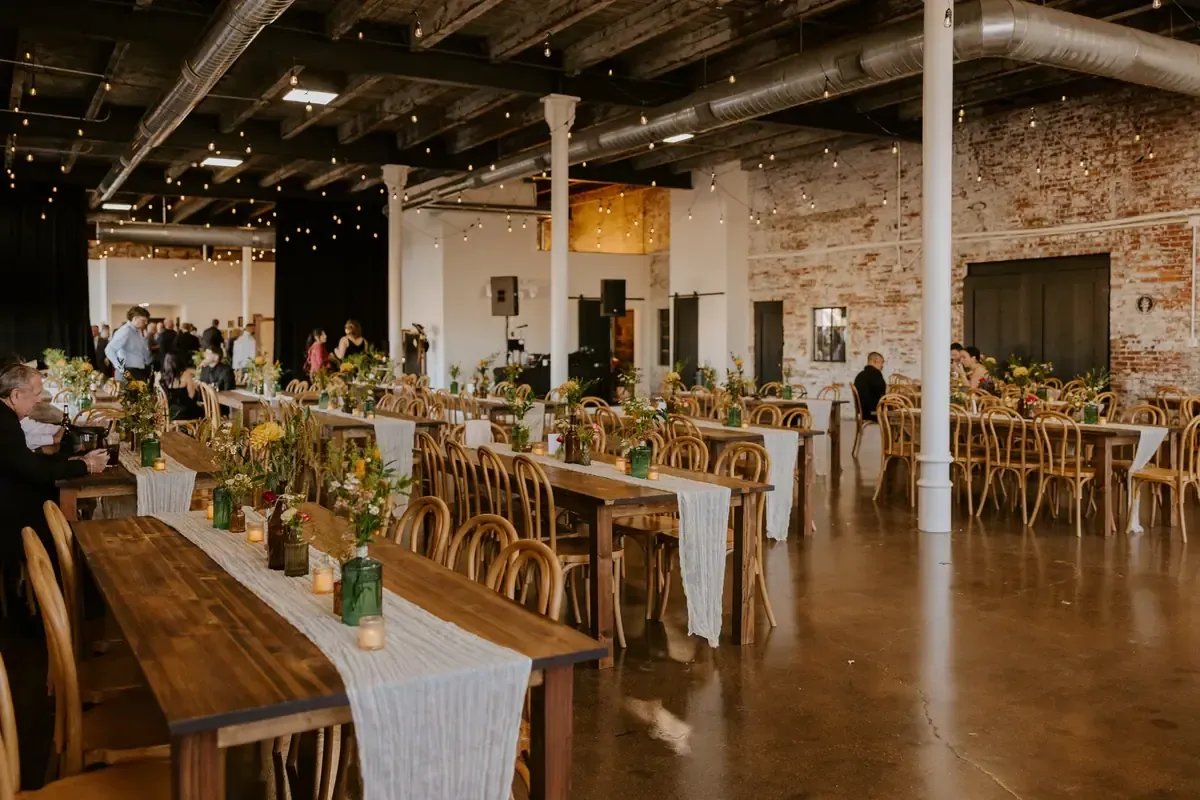 Photo: Clay House Photography
Which Indianapolis Venues Are Locked to One Caterer?
Fourteen well-known Indianapolis venues will not let you bring a caterer at all. Some run a single exclusive caterer, others a closed approved list with no off-list path. Knowing these up front saves you the tours. Several are the most-recommended rooms in the city, which is exactly why couples keep getting surprised.
| Venue | Who caters | Off-list? |
|---|---|---|
| Biltwell Event Center | In-house only | No |
| Mavris Arts and Event Center | In-house only | Dessert only |
| Crane Bay Event Center | Crystal Signature Events | Dessert only |
| The Indiana Roof Ballroom | Crystal Signature Events | No |
| Grand Hall at Crowne Plaza | Hotel in-house | No |
| Newfields | Kahn’s Catering | No |
| Ritz Charles | In-house only | Desserts, for a fee |
| The Indianapolis Propylaeum | Jacquie’s Gourmet Catering | No |
| Fountain Square Theatre | In-house, with minimums | Not published |
| Indiana Landmarks Center | Seven approved caterers | No |
| Tinker House Events | Approved partners only | No |
| Cinderwood | Approved caterer list | Not stated |
| Mustard Seed Gardens | Seven exclusive caterers | No |
| The Conservatory at Evergreen | One of seven required | No |
Some of those rows carry details worth knowing. The Propylaeum is exclusive to Jacquie’s for private events, showers, and holiday parties, and the approval-based food language you may have read elsewhere applies only to its board-and-organization rentals, not weddings. Crane Bay, The Indiana Roof Ballroom, and The Heirloom all run through the same operator, Crystal Signature Events. Indiana Landmarks Center has no off-list path but also charges no food-and-beverage minimum, which is a genuinely good trade. And The Conservatory at Evergreen supplies every beverage itself, alcoholic and non-alcoholic both.
Kahn’s Catering is worth calling out on its own, because it holds exclusive rights at a cluster of the city’s most recognizable rooms, including Newfields, the Eiteljorg, the Indiana State Museum, and Scottish Rite Cathedral. If you have your heart set on a museum wedding downtown, that is the arrangement you are walking into.
None of this makes those venues bad. Exclusive catering buys you one point of contact and a kitchen team that knows the room cold. It just is not the thing you searched for.
What Does an Outside Caterer Need to Work in Marion County?
A valid Marion County retail food license, food prepared in a licensed establishment, and usually a certificate of insurance for the venue. Marion County Public Health does not permit home-prepared food at licensed events, and food has to come from a licensed food establishment or processor. You can verify any caterer before you sign.
That last part is the useful bit and almost nobody mentions it. Marion County publishes food-safety inspection records publicly, so you can look up a caterer’s license and inspection history yourself rather than taking a website’s word for it. The county’s food and consumer safety program (Marion County Public Health, 2026) licenses and inspects the establishments your caterer is cooking in.
On the insurance side, expect two separate policies. Your caterer carries their own general liability, and most venues want a certificate naming the venue as additional insured. Separately, many venues require the couple to carry event liability coverage, which protects against injury, property damage, and alcohol-related incidents, and is required by many venues (The Knot, 2026). Irvington Lodge Events publishes a specific coverage minimum for events of fifty or more. Indiana Landmarks Center, Tinker House, Cinderwood, Harris Glen, and The Conservatory at Evergreen all require it too.
Here is the sequence I give couples:
- Confirm the venue’s catering policy in writing, including any off-list fee, before you put down a deposit.
- Ask what the kitchen is, specifically, and get the answer in the contract.
- Confirm who holds the liquor license and who is permitted to serve.
- Look up your caterer’s Marion County license and inspection record.
- Collect certificates of insurance from the caterer and the bar vendor, naming the venue.
- Buy your own event liability policy and add the venue as additional insured.
- Put load-in and load-out times in writing, including how early the caterer can arrive.
That last one catches people. A caterer who needs three hours in a venue that opens two hours before guests arrive is a problem you want to find in April, not in October.
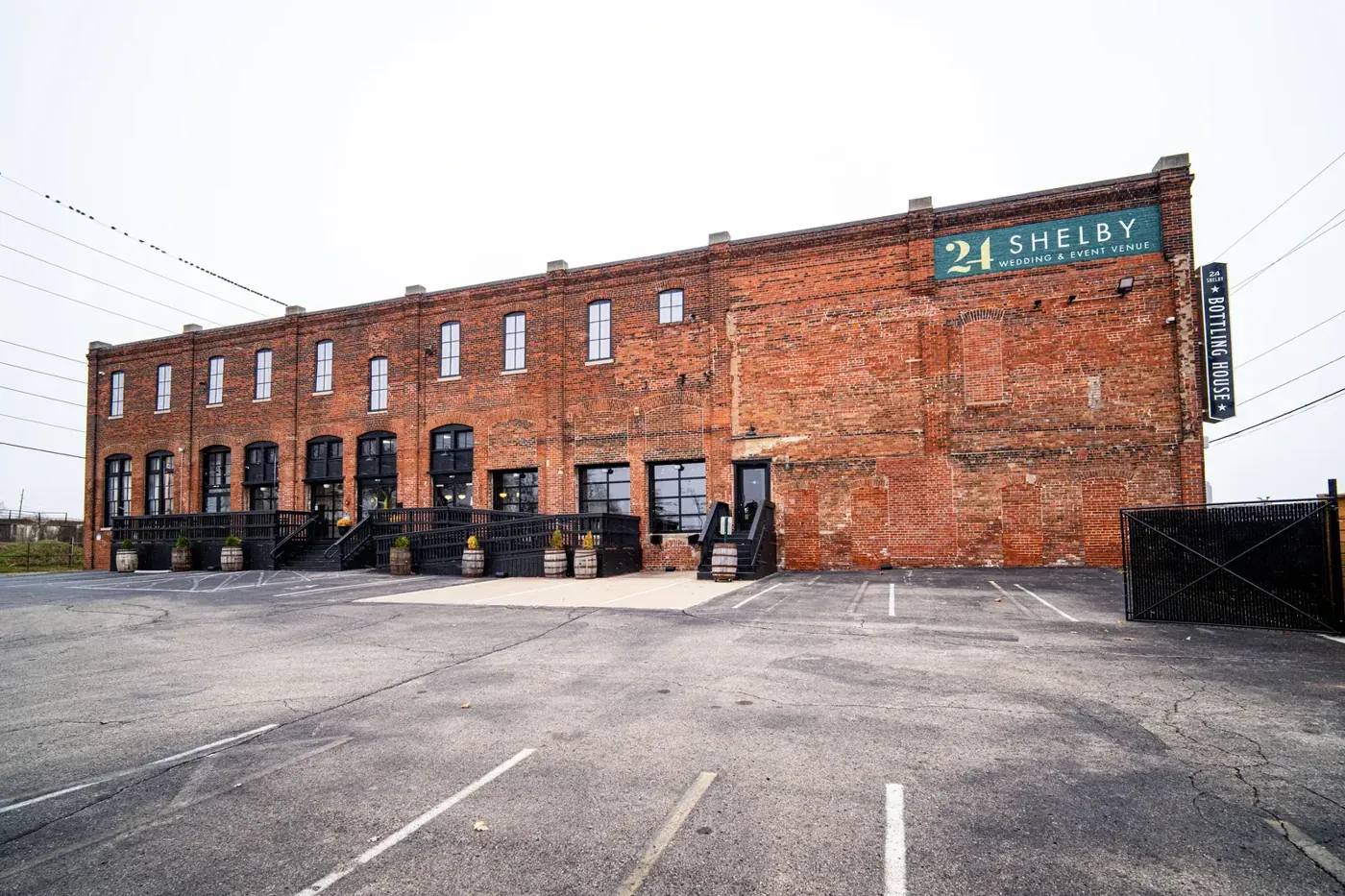 Photo: Clay House Photography
What Kind of Kitchen Does Your Caterer Actually Need?
Three different things get called a kitchen. A full commercial kitchen lets a caterer cook on site. A prep kitchen handles warming, plating, and staging with sinks and refrigeration, so food arrives cooked. And some venues have nothing usable, meaning food arrives fully ready and the caterer brings their own warmers.
That spec decides which caterers will bid your date, and it is the single most under-asked question on a venue tour. Indiana Landmarks Center has a full service kitchen plus two serving kitchens with a service elevator and an exterior load-in, restricted to its approved caterers. INDUSTRY, BASH, Radius, and 24 Shelby run prep kitchens or kitchenettes. Community Life Center has a prep kitchen with a sink, refrigerator, and ice machine, and publishes a list of what your caterer has to bring: cooking equipment, warmers, plates, glassware, flatware, and serving staff.
McGowan Hall is the honest outlier. Its own FAQ says outside caterers have to use a separate food prep facility and bring food ready to be served, and adds that while the venue can prep food, it would not suggest that for any sizable event. Respect that. A venue telling you what it cannot do is doing you a favor.
Ask the question this way: “What can my caterer actually do in your kitchen?” Not “do you have a kitchen.” Every venue has something they will call a kitchen.
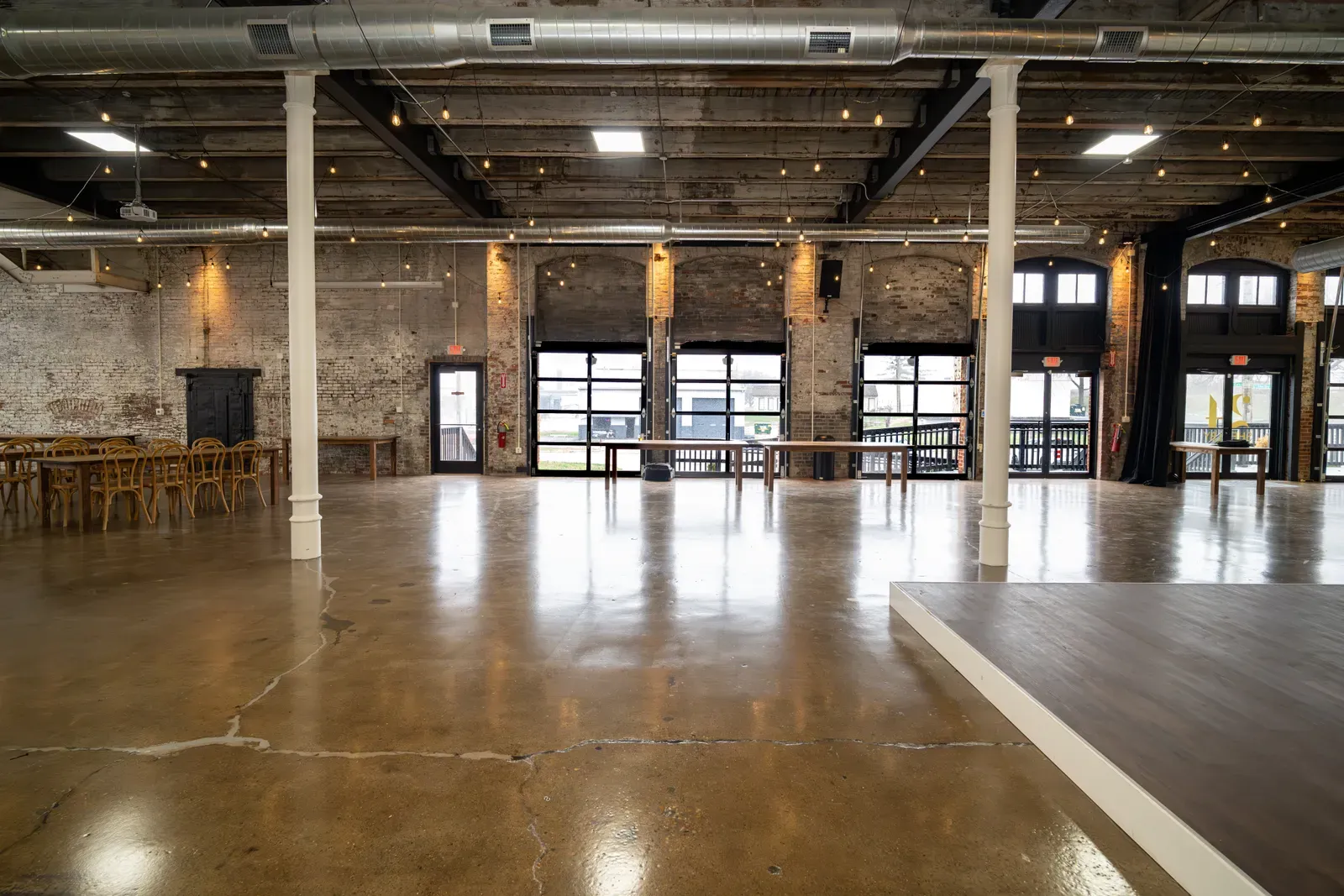 Photo: Clay House Photography
Why Does Outside Catering Matter More Than Budget?
Cost is the usual reason people give, and it is real, since catering, cake, and drinks together run about 24% of the average wedding budget (The Knot, 2026). But in this city the louder reason is food that an in-house kitchen cannot make.
Read the local threads and the pattern is obvious. The most-linked Indianapolis discussion on this topic opens with a couple planning a fusion wedding for 150 to 200 guests where traditional Asian food was non-negotiable. That is the real driver, and the numbers back it: 32% of couples now build religious, ethnic, or cultural elements into their wedding (The Knot, 2026). An exclusive caterer who does not cook your family’s food is not a budget problem, it is a wrong-venue problem.
The Indianapolis metro is projected at 11,694 weddings for 2025 (The Wedding Report, 2025). A meaningful slice of those couples need a specific caterer, and thirteen venues in this market can say yes to that.
Honestly, this is where I think the industry gets it backwards. Venues love a rigid package because it is easier to sell and easier to staff. But the wedding is not for the venue. If your grandmother’s recipe matters more than my opinion about plated versus buffet, hire the person who can cook it.
How 24 Shelby Handles Outside Catering
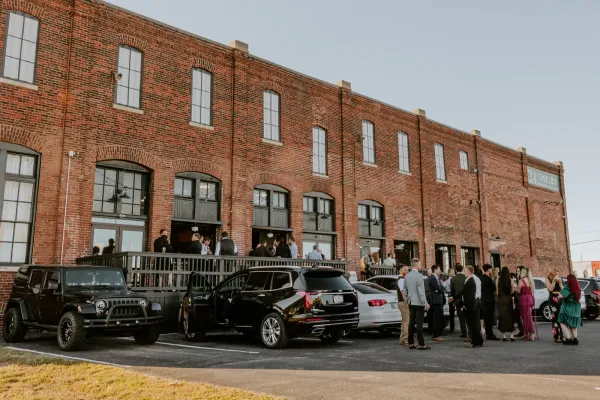
24 Shelby is open for food and closed for bar. Any caterer who is licensed and insured can work here, we keep no exclusive catering contract, we add no client-facing markup on your caterer’s bill, and there is no food-and-beverage minimum on catering. Our in-house bar is required and sold by package.
We do keep a preferred list, because some caterers know this building and load in without needing to be walked through it. Sweet Escape Cake Company, Nameless Catering Company, and Sweet and Savory Catering are on it. You are not required to use any of them, and I do not get paid if you do. The full list lives on our vendors page.
The kitchen is a prep kitchen. Sinks, refrigeration, and room to warm, plate, and stage. It is not a full commercial kitchen, so food needs to arrive prepared. I would rather tell you that now than have your caterer discover it at four o’clock on a Saturday. Our amenities page lists the rest of what comes with the room.
Two other things I will say plainly. The bar is not negotiable, for the license reasons above, and the bar packages are what they are. And the Prohibition Patio is a cocktail-hour space for about 25 people, not a ceremony space, no matter how good it looks in photos.
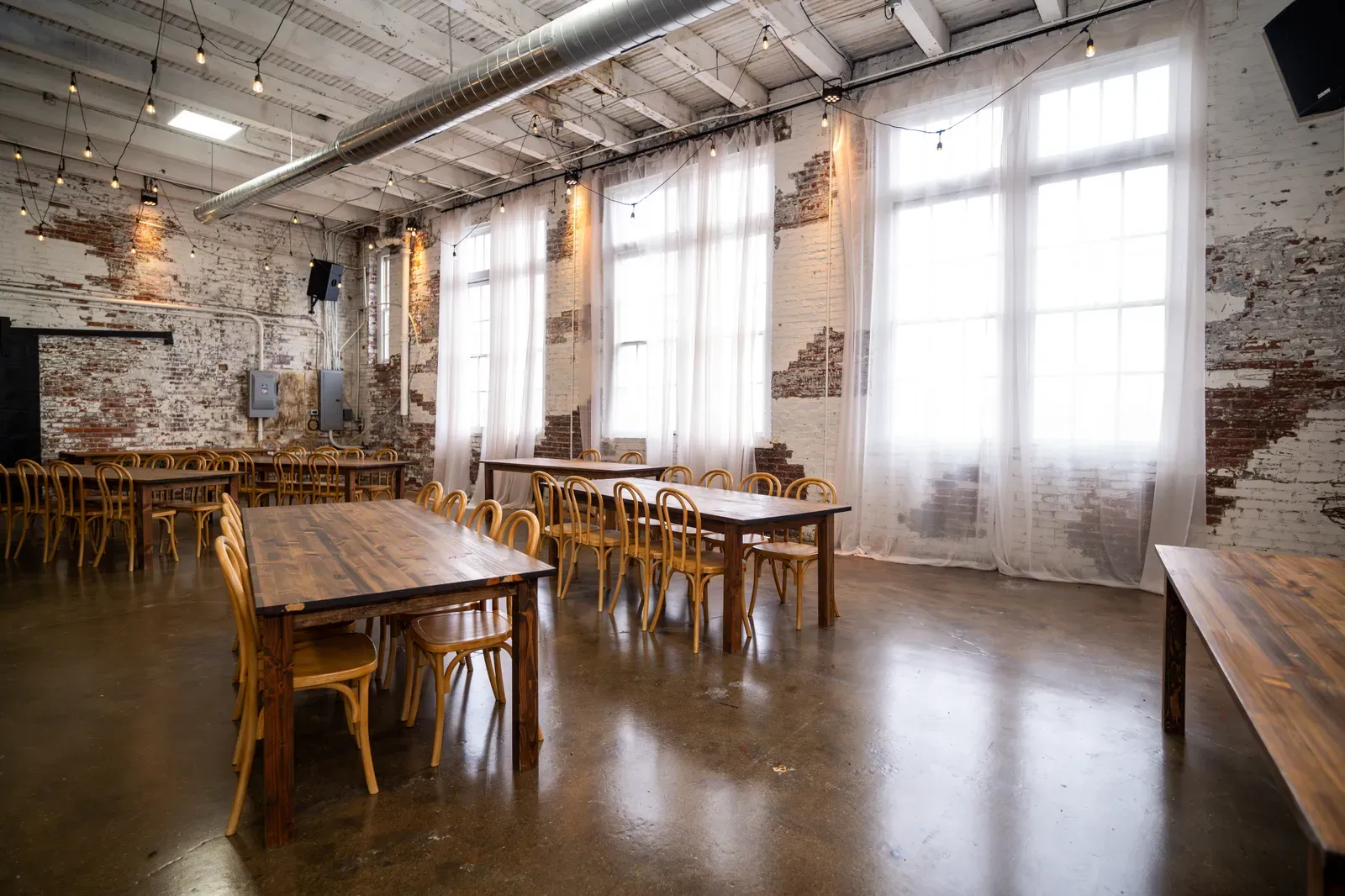
What you get in exchange is a room that does not need much help. The 1898 brick, the wood-beam ceilings, the oversized windows, and the Edison lights are already there, across 6,000 square feet on a single floor with no stairs, seating 250 or holding 300-plus standing. It is veteran-owned and woman-owned, and I am on site for every event, before the first vendor arrives and after the last guest leaves.
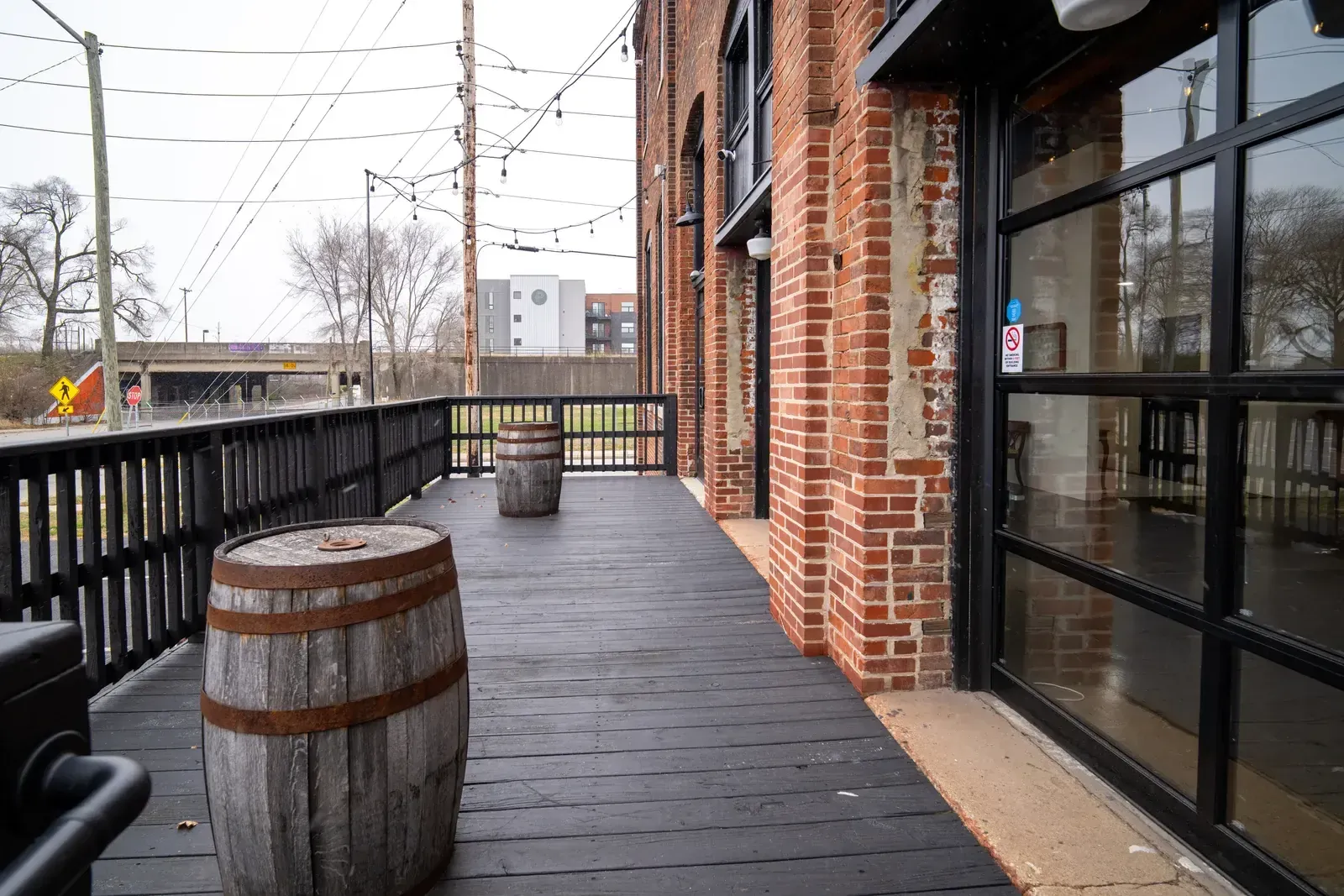 Photo: Clay House Photography
If you want to see how the room handles a seated dinner and where a caterer actually sets up, come look at the spaces, read through how we run weddings, or just book a tour and bring your caterer with you. I have never once minded that.
For more on picking between these rooms, the unique Indianapolis wedding venues roundup and the downtown Indianapolis event venues guide both go deeper on character and layout. When you get to the bar conversation, the open bar guide covers how packages actually work, and if you want the full decision framework, start with how to choose a wedding venue. For a look at one wedding from setup to send-off, see a wedding at 24 Shelby.
 Photo: Clay House Photography
Every policy in this guide came off the venue’s own website in August 2026. Venues change terms, and a few of the ones above publish contradictory pages. Confirm anything that decides your booking directly with the venue, in writing, before you sign.
Frequently Asked Questions
Which Indianapolis wedding venues allow outside catering?
24 Shelby, McGowan Hall, INDUSTRY, Radius, West Market Conference Center, and Irvington Lodge Events are open to any licensed caterer, and BASH in Carmel and Harris Glen in Mooresville are open in the surrounding metro. Community Life Center, Laurel Hall, both VisionLoft locations, and The Heirloom run preferred lists you can leave with approval, usually for a fee. Every policy here was read off each venue's own site in August 2026.
Can I bring my own alcohol to an Indianapolis wedding venue?
Almost certainly not. Every Indianapolis-area venue checked for this guide prohibits guest-supplied alcohol, including venues that let you hire any caterer you want. Indiana law drives it. A host can pull a temporary permit to dispense beer and wine, but serving liquor requires hiring a licensed alcoholic beverage caterer (Indiana ATC, 2026). Venues that hold a liquor license run the bar themselves rather than risk it. Treat food policy and bar policy as two separate questions on every tour.
What is an open vendor policy at a wedding venue?
An open vendor policy means the venue does not require you to hire from its list. You can book any caterer who is licensed and insured. Most Indianapolis venues advertising open vendor still carve out alcohol, so the honest description is open for food, closed for bar. A preferred list is different: it is a recommendation you may leave, sometimes for a fee. An approved list is a requirement with no off-list option at all.
How much is outside catering for a wedding?
It depends on guest count, service style, and how much front-of-house labor the format needs, and the venue's policy shifts it too. Catering, cake, and drinks together run about 24% of the average wedding budget, the biggest line item after the venue itself (The Knot, 2026). The Midwest is the lowest-cost region in the country for wedding catering (The Knot, 2025). Ask every caterer for a per-person total that includes service, tax, and gratuity.
Do Indianapolis venues charge a fee for using an outside caterer?
Some do. Laurel Hall states that choosing a caterer off its four-name list means an additional charge will be incurred. Community Life Center charges both a per-guest surcharge and a kitchen access fee the caterer pays directly. Harris Glen charges an upcharge if your caterer is drop-off only and the venue has to staff service. McGowan Hall and Irvington Lodge Events explicitly charge nothing extra for outside catering. Always ask for the fee in writing.
What does an outside caterer need to work a wedding in Marion County?
A valid Marion County retail food license, and food prepared in a licensed establishment. Marion County Public Health requires that food come from a licensed food establishment or processor, and home-prepared food is not permitted at licensed events (Marion County Public Health, 2026). Most venues also require a certificate of insurance before load-in. You can look up any caterer's inspection record on the county's public food-safety portal before you sign a contract.
What is the difference between a prep kitchen and a commercial kitchen at a venue?
A prep kitchen handles warming, plating, and staging, with sinks and refrigeration, which means food has to arrive already cooked. A full commercial kitchen lets a caterer cook on site. Some venues have neither, and require food to arrive fully ready to serve with the caterer bringing their own warmers. This single spec decides which caterers will bid your date, so ask what the kitchen actually is rather than whether one exists.
What is the cheapest way to feed 100 people at a wedding?
Buffet and family-style service almost always cost less per guest than plated dinners because they need fewer front-of-house staff. Booking a venue with no food-and-beverage minimum on catering helps more, because a minimum forces spend you may not need. An open-vendor venue lets you collect competing bids instead of accepting one quote, and 37% of couples now reach out to more vendors than they planned in order to find options that fit the budget (The Knot, 2026).
Related Reading
Discovery
Indoor vs. Outdoor Weddings in Indianapolis: How to Choose
Indoor vs. outdoor wedding venues in Indianapolis, compared by weather risk, decor cost, guest comfort, and rain plan. Written from inside a downtown venue.
Discovery
The Best Banquet Halls in Indianapolis (2026 Guide)
12 of the best banquet halls in Indianapolis for wedding receptions, corporate dinners, galas and milestone celebrations. Capacity and catering confirmed.

Discovery
Unique Wedding Venues in Indianapolis You Haven't Considered
A locally-sourced guide to 12 unique wedding venues in Indianapolis, from a 1898 brewery to museums, a glass dome over downtown, and the Indy 500 Pagoda.