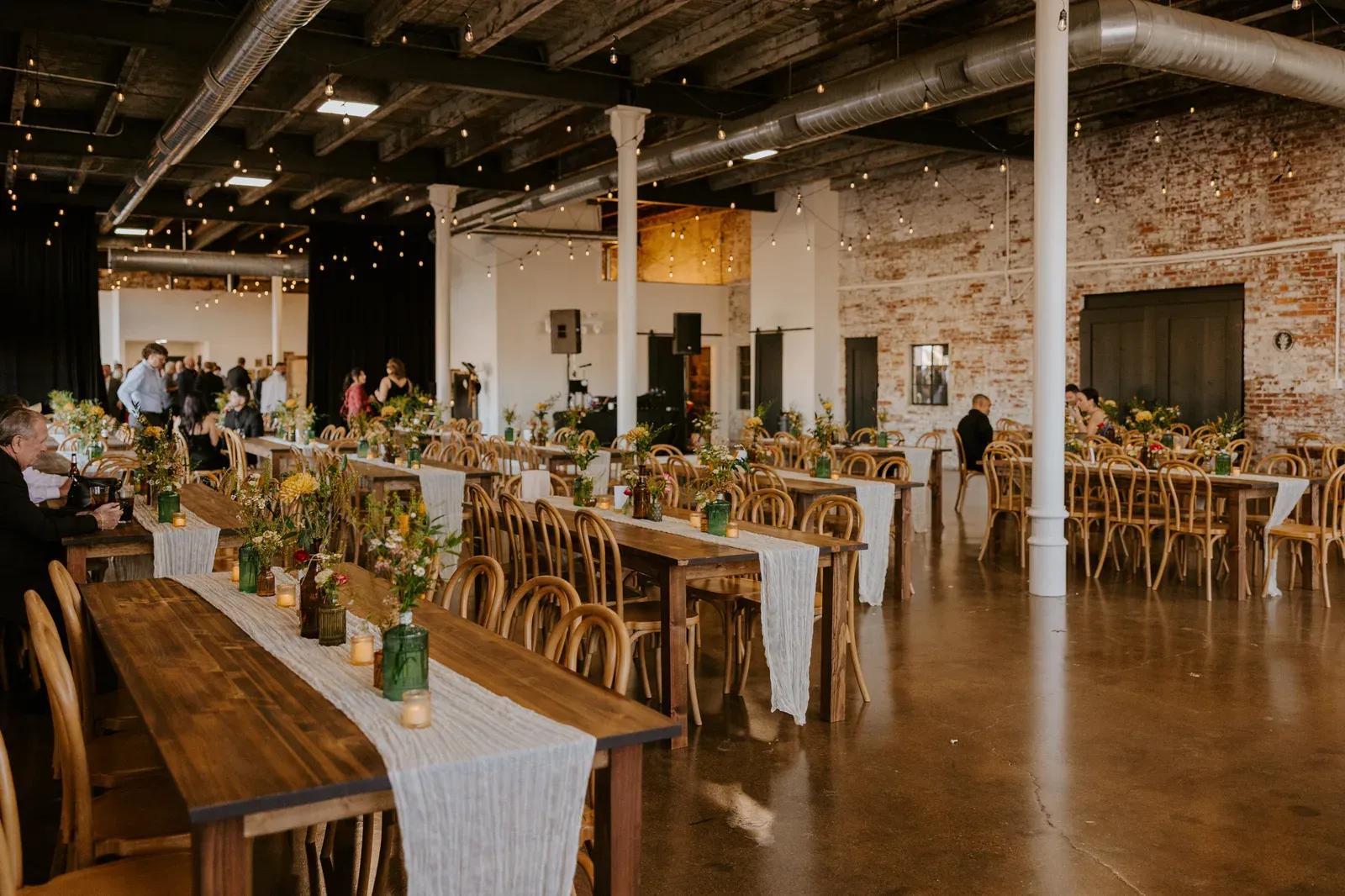
Photo: Photog Boss
Planning
25 Questions to Ask on Your Wedding Venue Tour (Indianapolis Guide)
 By Sarah Conrad Updated May 15, 2026
 A wedding venue tour is your one shot to compare a marketing brochure to reality. The right questions surface the hidden costs, the rigid policies, and the day-of details that decide whether your wedding feels effortless or chaotic. Here are the 25 questions every Indianapolis couple should bring on every venue tour, the why behind each one, and the red flags to listen for.
I have run hundreds of tours at 24 Shelby, and I have been on the wedding floor as a bartender, manager, and now venue owner for more than 15 years. The questions below are not theoretical. They are the questions I wish more couples asked me, and the ones I see couples regret skipping once a contract is signed.
 Photo: Clay House Photography
Why These Questions Matter More Than the Photos
Couples spend hours scrolling venue Instagram and almost no time on the questions that actually predict whether the day works. 75% of couples hit at least one surprise fee during planning (Zola, 2026). Most of those surprises were knowable at the tour stage. The questions below pull them forward, before any contract is signed.
According to Sarah Conrad, Managing Partner at 24 Shelby, “I’d rather a couple walk in with a list and grill me for 90 minutes than book me on a Saturday tour and find out three months later that I don’t do something they assumed I did.”
The pattern across the Indianapolis venue market is consistent. 76% of couples cite cost as the number-one factor when choosing a venue (Great Event, 2026), and 73% start their search on Google (WedPro, 2025). They show up to the tour having already memorized the headline rental rate. They almost never know to ask what is underneath it.
What is underneath is what changes the math. Service charges of 18 to 25% of food and beverage, hourly overtime, ceremony fees stacked on rental fees, vendor surcharges, and tax on top of all of it. Two venues with identical headline rates routinely end up thousands apart on a real invoice. The right tour question is the cheapest insurance you can buy.
For the broader cost layer behind every line item, see the Indianapolis wedding cost guide. For the tier-by-tier breakdown of what a venue rental actually contains, see the all-inclusive wedding packages guide.
How Do You Get Real Pricing From an Indianapolis Wedding Venue?
Every venue lists a base rental rate. Almost no venue charges only that. Service charges, taxes, gratuity, overtime, and add-ons routinely double the headline number. These 10 questions force every venue to give you a real, all-in figure you can actually compare against another venue’s real, all-in figure.
1. What is included in the base rental rate, line by line?
“Furniture” can mean 20 folding chairs or 250 ghost chairs and farm tables. “Lighting” can mean a single sconce or a full Edison-bulb wash. The list separates a venue tour from a venue purchase.
Red flag: “It’s all in there” without a written list. Ask for the list.
2. What is the service charge or admin fee, and is it on top of gratuity?
Industry standard runs 18 to 25% of food and beverage (Zola, 2026). On a five-figure food and beverage minimum, the service charge alone can rival the rental fee.
Red flag: A venue that will not quote the service charge in writing, or that bundles tax inside the package without showing the math.
3. What is the deposit, payment schedule, and refund policy?
Some venues hold a non-refundable 25% deposit. Others want 50% at signing with a final payment 60 days out. Two venues with identical rental fees can have very different cash-flow timelines.
Red flag: A non-refundable deposit with no postponement clause.
4. What is the overtime rate per hour, and how is it billed?
Bands play late. Toasts run long. Overtime is one of the most commonly triggered surprise fees and one of the easiest to negotiate upfront, before a contract.
Red flag: An hourly overtime rate quoted in 30-minute increments with no rounding rules.
5. What fees apply if our final guest count drops?
Many venues set a minimum guest count or a food and beverage minimum. If your RSVPs come back lower than projected, the gap is yours to pay.
Red flag: A minimum that does not flex when life changes.
6. Are taxes and gratuity quoted in or on top of the package?
Indiana’s 7% sales tax applies to venue rental and to food. Two quotes that look identical can be 7 to 30% apart once tax, service charge, and gratuity are layered on.
Red flag: Quotes presented without tax and service charge broken out as separate lines.
7. What is the policy on a price increase between booking and event date?
A 14-month engagement is the average (The Knot, 2026). That is plenty of time for a venue to adjust its rates. Lock your rate or know exactly how it can move.
Red flag: A contract clause that lets the venue raise pricing “due to market conditions” with no cap.
8. Are there separate ceremony and reception fees?
At many venues, the ceremony costs extra and includes a flip between rooms. At others, a single rental covers both. The number matters; so does whether the flip labor is included.
Red flag: A ceremony fee quoted verbally but missing from the package PDF.
9. What add-on costs are most couples surprised by here?
Asking the venue to name them out loud forces an honest list. The best venues will answer plainly. The worst will dodge.
Red flag: “We don’t have any.” Every venue has at least three.
10. Can you send a sample full invoice from a recent wedding our size?
A sample invoice is the cheapest education in the entire planning process. It shows the headline package, the add-ons, the tax, the service charge, and the gratuity in a real configuration. This single document tells you more about a venue than any tour.
Red flag: “We don’t share other clients’ invoices.” Anonymized samples are normal at any transparent venue.
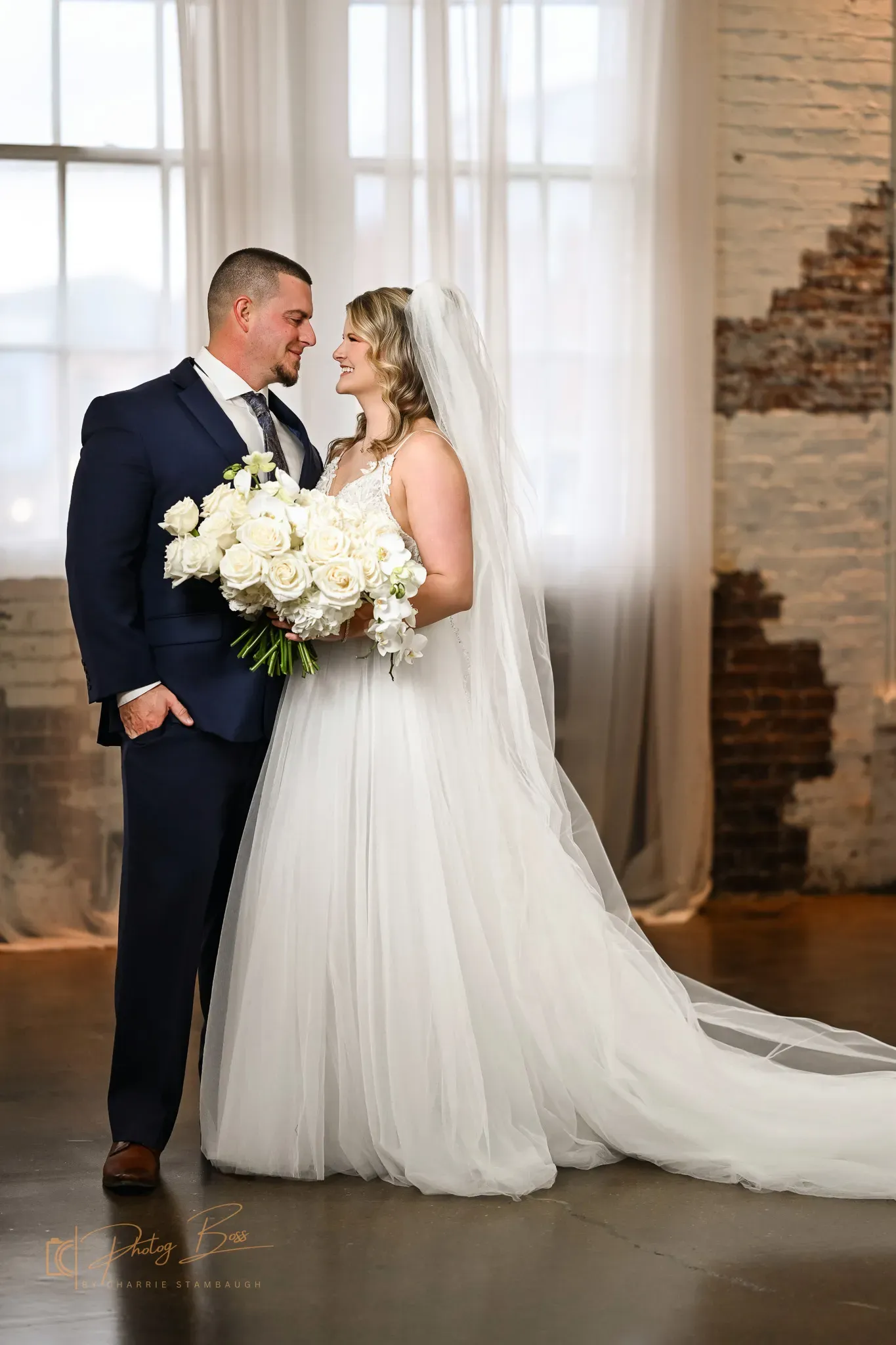 Photo: Photog Boss
What Logistics Questions Should You Ask on a Venue Tour?
Pretty rooms collapse under bad logistics. A 14-month engagement gives a venue plenty of time to forget the basics: load-in windows, music curfews, room flips, parking. These five questions test whether the venue actually knows how to run a wedding day, or whether they hand over keys and disappear at 5 PM. Ask them before you ask about anything else.
11. Walk me through how a typical wedding day flows here, hour by hour.
This is the single highest-yield question on the list. Janine Anderson, Director of Sales and Catering at Hutton Hotel, told The Knot the day-flow walkthrough “clarifies logistics and enhances the guest experience” (The Knot, 2025). A venue that cannot walk you through their own typical day is one you do not want running yours.
Red flag: A generic answer that does not reference specific rooms, doors, or transitions.
12. What is the load-in window for vendors, and what time must we be fully out?
Industrial and historic Indianapolis venues live or die on this. A florist arriving at 2 PM for a 5 PM ceremony is rushed. A 10 PM cleanup deadline is a different planning problem than a 1 AM deadline.
Red flag: Vague answers like “vendors can come early.” Get hours.
13. What time does amplified music have to end?
Indianapolis ordinance requires sound from amplifiers and loudspeakers to be inaudible at 50 feet between 10 PM and 7 AM (Indy.gov, 2025). Indoor amplified music inside a well-insulated venue continues longer. Patio amplified music does not. The distinction matters for any downtown venue with an outdoor space.
Red flag: A venue that does not know the curfew off the top of their head, or that promises a hard guarantee on outdoor music past 10 PM without a special variance.
14. How many events do you host per day or per weekend?
A venue running back-to-back weddings on Saturday is not the same product as a venue with one event per day. Both can be great. They are not the same.
Red flag: An overlapping event with no explicit separation plan in writing.
15. Is a ceremony rehearsal included, and when can it be scheduled?
Rehearsals get squeezed when a Friday wedding precedes your Saturday. Make sure the rehearsal time is in your contract, not on a wish list.
Red flag: “We’ll figure it out closer to the date.”
 Photo: Clay House Photography
Which Vendor, Food, and Bar Questions Matter Most?
Vendor and beverage policy is where most of the hidden cost lives. Couples hire 13 vendors on average for a wedding (The Knot, 2026), and every one is either approved, restricted, or surcharged by the venue. The five questions below uncover which, plus the bar and catering rules that quietly decide a major slice of your total.
16. Do you have a required, preferred, or open vendor list?
Required means you must use them. Preferred means zero friction (or a discount) if you do, plus a buyout fee if you do not. Open means full freedom. The model the venue runs changes the math on your entire vendor budget.
| Policy | What It Means | Outside Vendor Cost | Best For |
|---|---|---|---|
| Open | You hire any licensed vendor | No buyout fee | Couples with a planner or strong vendor preferences |
| Preferred | Recommended list, outside allowed with surcharge | Often a percentage of total or a flat add-on | Most couples; balance of guidance and freedom |
| Required / Exclusive | You must use the in-house team or named partners | Not an option | Couples who want fewer decisions and one contract |
Red flag: A preferred list with no outside-vendor pricing disclosed in writing.
17. Is catering in-house, exclusive, or open, and are tastings included?
58% of couples cite food and beverage as a top wedding priority (The Knot, 2025). Whether you choose the chef matters. Whether you taste the food before booking matters more.
Red flag: An exclusive in-house caterer with no tasting before contract signing.
18. What is the alcohol policy, and what is included in the bar package?
Some venues require an in-house bar with their own bartenders. Others allow BYO with a licensed bartender. The pour cost, the brands available, and the bartender-to-guest ratio (industry standard runs roughly one bartender per 50 guests) all live here.
Red flag: A bar that will not share its pour list or its bartender count before booking.
19. Do vendors get a meal, and do we pay for it?
A 6-hour reception means your photographer, DJ, and planner are with you for 8 or more hours. Most professional vendor contracts require a hot meal. The cost lands on you and is rarely inside the venue package.
Red flag: A venue that does not track or coordinate vendor meals.
20. What insurance do vendors need to carry, and do you carry event liability?
Most venues require vendors to show certificates of insurance. Some require event liability on the couple too, typically through WedSafe or Markel. Knowing the policy upfront prevents a frantic week-of scramble.
Red flag: “We don’t worry about that” from the venue. Run.
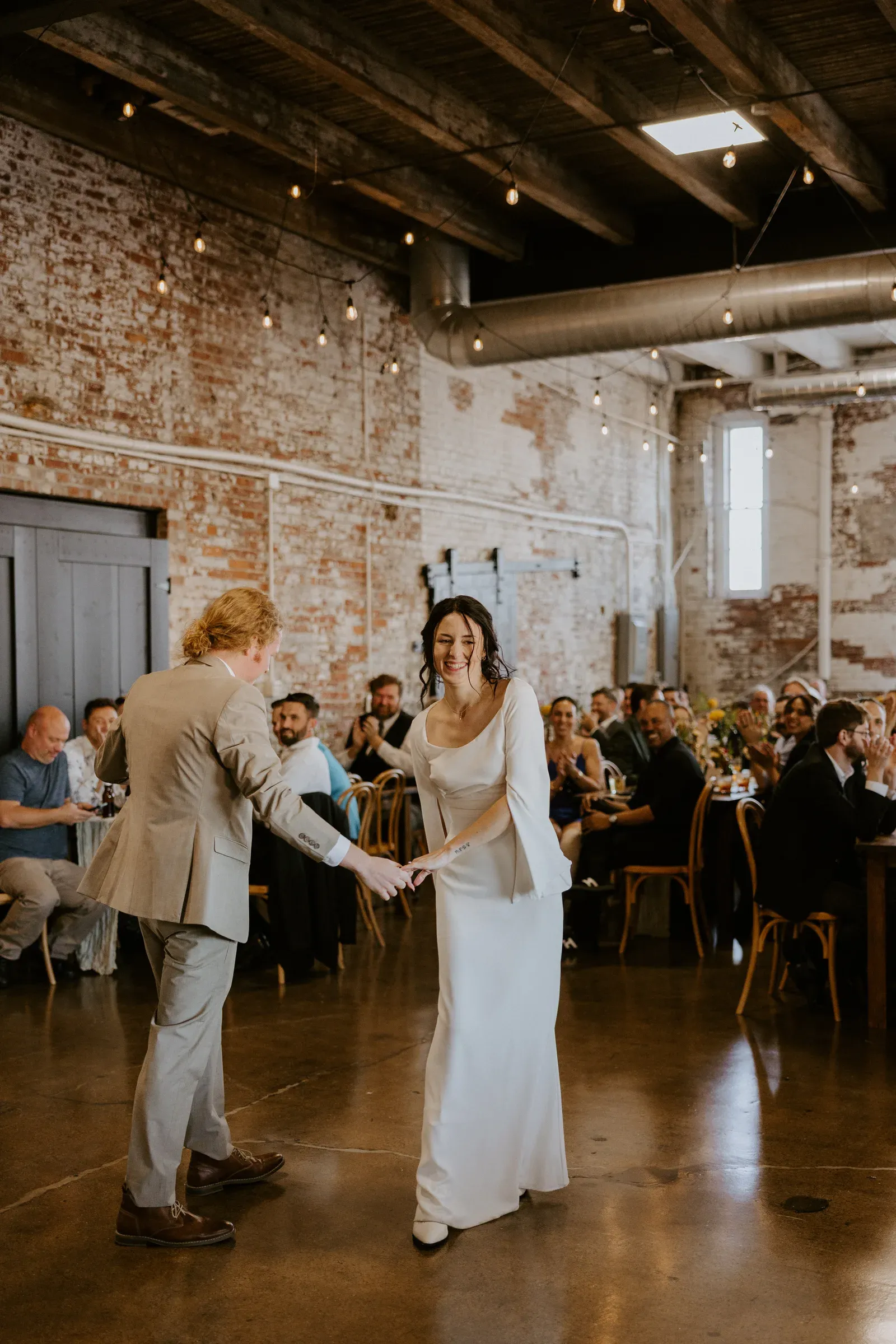 Photo: Clay House Photography
What Day-Of and Policy Questions Should You Cover Before Signing?
These last five questions are the ones couples most regret skipping. They surface the human and structural details that do not show up in the brochure: who is actually running your day, what happens if it rains, where your guests park, and whether your grandmother can get from the door to her seat without help.
21. Who is our day-of point of contact, and is it the same person we book with?
86% of couples book the first vendor who responds to their inquiry (WeddingPro, 2025). That same person is rarely the one running your event four months later. Confirm the handoff in writing.
Red flag: A booking contact who cannot name the day-of coordinator, or one who tells you “we’ll assign someone closer to the date.”
22. What is your weather backup plan, and at what point is the call made?
Indianapolis averages 42 inches of precipitation annually, with May and September among the wettest months. Any outdoor element needs a written rain plan and a clear decision deadline, typically 48 hours out.
Red flag: “We’ll see what the forecast says.” Vague decision timing means a vague event.
23. Where do guests park, what does it cost them, and is there a valet partner?
Almost no downtown Indianapolis venue has dedicated guest parking. The honest answer is a list of nearby garages, hourly rates, Sunday free-meter rules, and any partnership the venue has worked out. Pretending parking is “easy downtown” is a tell.
Red flag: A vague gesture at “the lot down the street.” Get a written parking sheet.
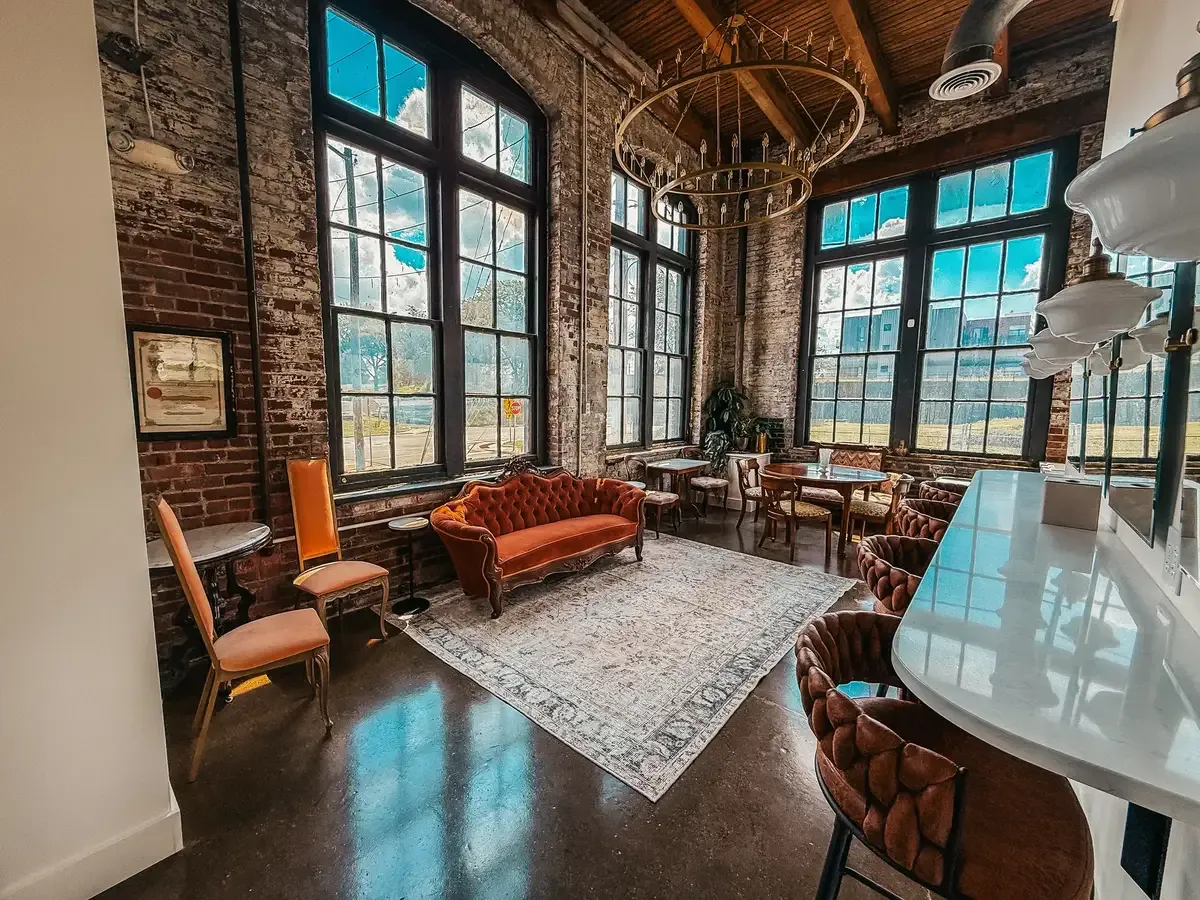 Photo: Clay House Photography
24. Is the venue ADA-accessible end to end, including restrooms, ceremony spaces, and getting-ready suites?
Most pre-1990 Indianapolis buildings were not built to ADA standards and have been retrofit unevenly. A grandparent in a wheelchair, a guest on crutches, and a parent with a stroller all use the same path. Walk that path on the tour.
Red flag: “Mostly accessible” without specifics. Get a real answer.
25. What is your cancellation, postponement, and force-majeure policy?
COVID rewrote every venue’s force-majeure clause and most couples still do not read theirs. Ask whether a postponement carries the full deposit, whether new dates are guaranteed, and what counts as a force-majeure event.
Red flag: A force-majeure clause that excludes pandemics, weather, or government orders without a postponement option.
How Many Indianapolis Wedding Venues Should You Tour Before Booking?
Tour three to five. More than five and decision fatigue takes over. Fewer than three and you lack a baseline for comparison. 45% of couples book after touring only one venue (Weddingsonline, 2025), and many later regret not having a comparison point. Three tours give you a baseline. Five give you a clear winner.
The Indianapolis venue market is dense enough to support this. The city hosted 11,694 weddings in 2025 (The Wedding Report, 2025), with an average guest count of 150 to 160, well above the 117 national average. There are pillar-style historic venues, hotel ballrooms, industrial conversions, garden estates, and modern blank-canvas spaces. Touring three across two or three categories gives you a real frame for what you actually want.
According to Sarah Conrad, “After two tours I can usually tell which venue a couple is going to book. After five, they are confused and exhausted. Three is the sweet spot. Walk into the third tour with the questions already answered from the first two and you will know within 20 minutes whether it’s the one.”
For a tour-by-category starting list, see the downtown Indianapolis pillar venue guide, the historic Indianapolis wedding venues roundup, and the affordable Indianapolis wedding venues breakdown.
How Should You Take Notes During a Venue Tour?
Bring a notes app, a printed list of these 25 questions, and your phone camera. Photograph what is actually in the room: electrical outlets, ceiling heights, door widths, restroom counts, and the path from the parking area to the ceremony space. Take voice memos with the venue’s permission. Send yourself a one-paragraph summary in the parking lot before you drive home.
A few specific tactics that change how useful a tour is:
- Tour at the time of day your wedding will happen. A 10 AM sunny tour for a 6 PM October wedding tells you almost nothing about the actual lighting. Ask to come back, even briefly, at the right hour.
- Ask to see real wedding photos from couples your size. Marketing photos are styled. Real-event photos show what 150 people in the room actually look like, with chairs, plates, and bar carts in real positions.
- Bring one person whose judgment you trust. Not your full bridal party. One person. They notice what you miss.
- Test the bathroom path from the farthest seat. If grandma cannot find it, your night gets harder.
- Sit in the chairs the venue actually plans to use. A ghost chair that looks great in photos can be hard to sit in for four hours.
Then take the answers home and put them in a side-by-side spreadsheet. Apples to apples means total all-in cost for your guest count and timeline, not the marketing rental fee. For the deeper line-item layer, see the hidden costs deep dive and the what’s included in a venue rental guide.
 Photo: Clay House Photography
If you’d like to see how 24 Shelby answers all 25 of these on a real tour, we run them seven days a week, mornings and evenings, and every client gets my personal cell number once they book. Start with the spaces page for the rooms, our Indianapolis wedding venue page for what’s included in our package, and our story for the 127-year history of the building. When you’re ready, reach out and we’ll find a time that works.
Frequently Asked Questions
What questions should I ask on a wedding venue tour?
Start with the 10 pricing questions: line-by-line inclusions, service charge, deposit, overtime, guest-count minimums, tax breakdown, ceremony fees, and a sample full invoice. Add five logistics questions on day flow, load-in, music curfew, events per day, and rehearsal. Cover vendor policy, catering, bar, vendor meals, and insurance. Close with the five day-of questions: point of contact, weather backup, parking, accessibility, and cancellation policy.
How many wedding venues should I tour before booking?
Tour three to five. 45% of couples book after touring only one venue, and many later regret not having a comparison point ([Weddingsonline, 2025](https://www.weddingsonline.ie/blog/how-couples-choose-wedding-venue/)). More than five and decision fatigue takes over. Three tours give you a baseline for comparison; five give you a clear winner. Walk into the later tours with the questions already answered from the first ones.
What hidden fees should I ask about during a venue tour?
Service charges (typically 18 to 25% of food and beverage per [Zola, 2026](https://www.zola.com/expert-advice/whats-the-average-cost-of-a-wedding)), Indiana's 7% sales tax, overtime rates, cake cutting, corkage, vendor meals, ceremony chair flips, additional bartenders, cleaning, security, valet, and rentals beyond the base furniture count. Ask for a sample full invoice from a recent wedding to see them all in real context.
What time does music have to end at downtown Indianapolis wedding venues?
Indianapolis ordinance requires sound from amplifiers and loudspeakers to be inaudible at 50 feet between 10 PM and 7 AM ([Indy.gov, 2025](https://www.indy.gov/activity/special-events-permits)). In practice, outdoor amplified music ends at 10 PM at any downtown venue. Indoor amplified music inside a well-insulated venue continues longer, often to midnight or 1 AM depending on the building.
How early should I book a wedding venue in Indianapolis?
Peak-season Saturdays (May through October) book 12 to 18 months in advance ([The Knot, 2025](https://www.theknot.com/content/is-there-an-off-season-for-weddings)). Indianapolis hosted 11,694 weddings in 2025 ([The Wedding Report, 2025](https://wedding.report/action/wedding_statistics/view/market/id/26900/idtype/m/location/Indianapolis_Carmel_Anderson__IN/)), with 76% concentrated in those six months. Off-season dates and Friday or Sunday weddings book on 3 to 6 month timelines.
Can I bring my own caterer to my Indianapolis wedding?
It depends on the venue tier. Open-vendor venues let you bring any licensed caterer. Preferred-vendor venues let you bring outside caterers with a buyout fee, often a flat add-on or a percentage of total. Exclusive in-house venues require their team. Always ask whether a tasting is included before you sign a contract, and confirm the rule in writing.
What is the single most important question to ask on a venue tour?
Walk me through how a typical wedding day flows here, hour by hour. Janine Anderson, Director of Sales and Catering at Hutton Hotel, told The Knot the day-flow walkthrough 'clarifies logistics and enhances the guest experience' ([The Knot, 2025](https://www.theknot.com/content/wedding-venue-site-tour-questions-to-ask)). A venue that cannot walk you through their own typical day is one you do not want running yours.
Related Reading

Planning
Just Got Engaged in Indianapolis? Your First 30-Day Checklist
Just got engaged in Indianapolis? Here's exactly what to do first: a week-by-week 30-day checklist from inside a downtown venue. Celebrate, budget, then book.

Planning
Rehearsal Dinner Venues in Downtown Indianapolis: Top Picks
Ten rehearsal dinner venues in downtown Indianapolis: private-room capacities, walking distance from your wedding, and the etiquette on who pays.
Planning
Downtown Indianapolis Wedding Weekend Guide: Hotels, Dining & More
Hotels, rehearsal dinners, brunch, and things to do for downtown Indianapolis wedding guests. Built around 24 Shelby, for couples planning the whole weekend.