Photo: Photog Boss
Discovery
Historic Wedding Venues in Indianapolis: Character Over Convention
 By Sarah Conrad Updated Jun 1, 2026
 I have walked couples through 24 Shelby’s 1898 bottling house every week since we opened, and most of them tour two or three other historic Indianapolis venues before deciding. Indianapolis has more truly historic wedding venues than people realize, but only a few that fit any specific wedding. This is the local working-list, ordered by year built, with what each building actually was originally and what is left of it.
What Counts as a Historic Wedding Venue in Indianapolis?
Historic in Indianapolis means the building itself is genuinely old, usually 75 or more years, with original architecture that has been preserved through the renovation. That separates historic from vintage, which is an aesthetic that can be applied to a brand-new build, and from rustic, which usually means a converted barn or farm structure. The 11 venues below all clear the original-building bar.
Indianapolis’s historic stock falls into four buckets: industrial buildings (factories, breweries, warehouses) from the 1880s-1920s, ecclesiastical buildings (churches, Masonic temples) from the 1890s-1930s, Gilded Age mansions from the 1880s-1916, and grand civic spaces (Union Station, theaters, ballrooms) from the 1880s-1929. Each plays differently on a wedding day.
The reason couples ask about historic venues at all is usually pretty practical. Built-in character does the decorating for you. Only 2% of couples surveyed wanted a fully customizable blank canvas (Zola, 2025). The other 98% want the room to already look like something when they walk in. The full Zola First Look Report 2025 is the source.
 Photo: Photog Boss
Historic Wedding Venues in Indianapolis at a Glance
The 11 venues below are the ones Indy couples shortlist most often when “historic” is the lead criterion. Capacities are pulled from each venue’s own site, not third-party listings (which lag and sometimes lie).
| Venue | Year Built | Original Purpose | Capacity (seated / standing) | Catering | Neighborhood |
|---|---|---|---|---|---|
| Mavris Arts and Event Center | 1883 | Industrial warehouse | ~325 indoor / 199 outdoor | In-house only | Cole-Noble |
| Crowne Plaza Union Station Grand Hall | 1888 | Passenger railroad terminal | 600 / 800 | In-house only | Mile Square |
| The Indianapolis Propylaeum | ~1890 | Schmidt-Schaf private mansion | 100 / 200 (mansion); up to 600 (lawn) | Outside caterers permitted | Old Northside |
| Indiana Landmarks Center | 1891 | Central Avenue Methodist Church | 550 (Grand Hall) / 350 (Cook Theater) | Approved caterer list | Old Northside |
| 24 Shelby | 1898 | Home Brewing Company bottling house | 250 / 300+ | Outside caterers allowed; in-house bar | Bates-Hendricks |
| The Athenaeum | 1894-1898 | Das Deutsche Haus (German-American clubhouse) | Up to 500 | In-house only | Mass Ave / Lockerbie |
| Laurel Hall | 1916 | Stoughton Fletcher private estate | 200 seated | Outside caterers permitted | Northeast Side |
| Biltwell Event Center | 1922 | Window and door factory | 600 / 750 | In-house only | West of downtown |
| Indiana Roof Ballroom | 1927 | Indiana Theatre Spanish atmospheric ballroom | 800 / 1,000 | In-house only | Mile Square |
| Madam Walker Legacy Center | 1927 | Madam C.J. Walker Manufacturing Co. HQ | 350 ballroom | In-house events team | Indiana Avenue |
| Fountain Square Theatre | 1928 | 1,500-seat motion picture and vaudeville theater | 300 ballroom | In-house | Fountain Square |
Sources: each venue’s own site and FAQ. Capacities depend on layout and whether the ceremony is held in the same room as the reception (which usually drops seated count 30-40%). Always confirm directly during the tour.
For the broader citywide picture (not just historic), the complete Indianapolis wedding venue guide covers 14 spots across every style category. For couples specifically chasing the industrial-chic and warehouse aesthetic, several historic-industrial venues here overlap with the industrial bucket. Couples planning a Roaring Twenties wedding theme will find five of these venues fit the era literally.
What Are the Best Historic Wedding Venues in Indianapolis?
Listed in order of original construction, oldest first.
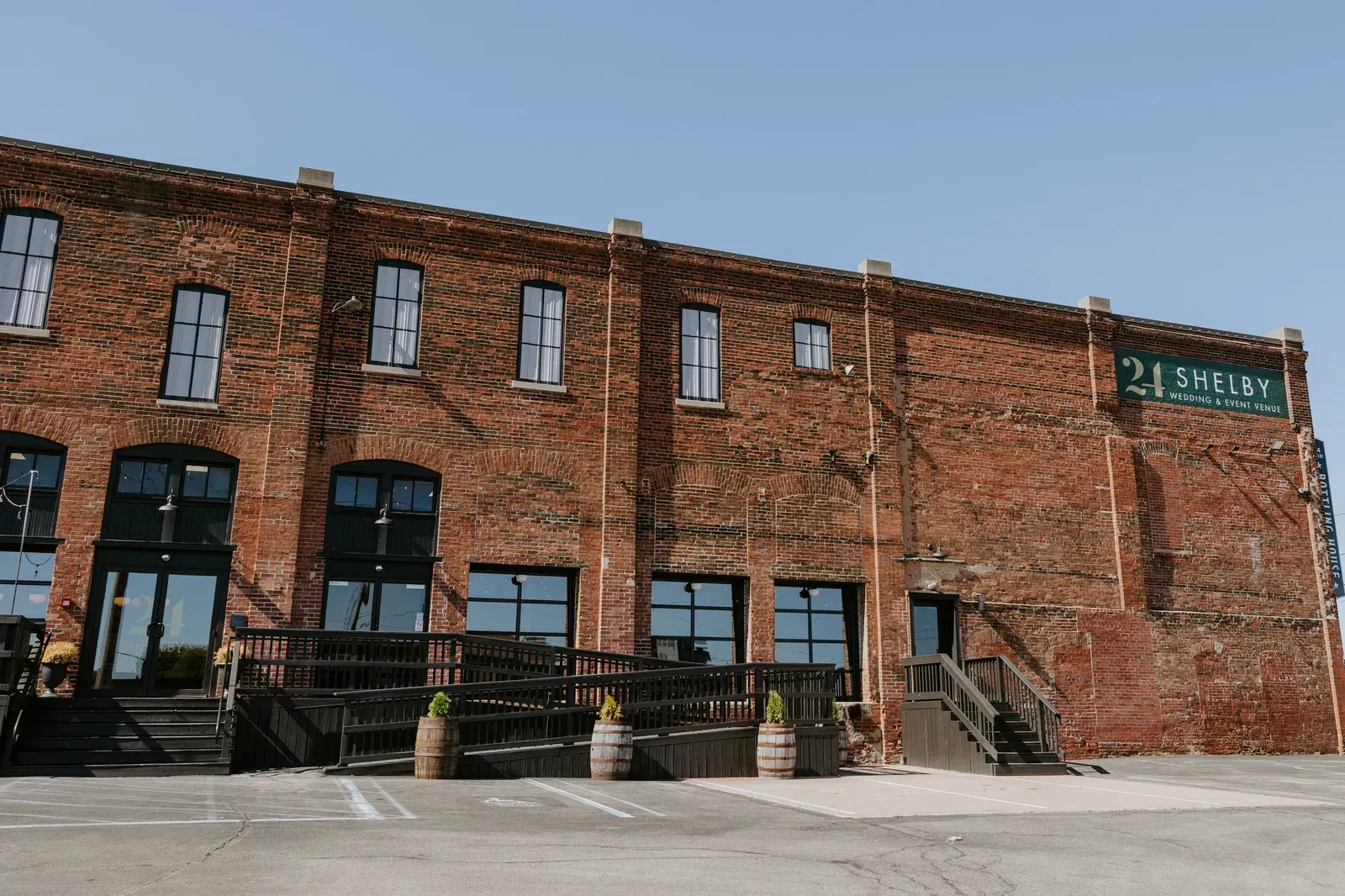 Photo: Photog Boss
Mavris Arts and Event Center (1883)
An 1883 brick building in the Cole-Noble district, originally an industrial warehouse, with six event spaces under one roof: a main hall with original exposed brick and structural beams, a speakeasy bar, a rooftop patio, and three smaller rooms. Indoor capacity runs around 325 seated, plus a 199-capacity outdoor terrace. Catering is exclusively in-house, no exceptions for outside food (a licensed dessert vendor is the only carve-out). Source: mavris.net.
This is the oldest building on the list. The Cole-Noble neighborhood is a few blocks east of Mass Ave, walkable to a handful of bars and restaurants for the after-party but quieter than the Mile Square. Mavris is the right pick for couples who want the rooftop and the speakeasy and are fine with a single-vendor F&B program.
Crowne Plaza Indianapolis Downtown Union Station Grand Hall (1888)
The original Indianapolis Union Station was the first “union” railway station in the United States (1853). The current Romanesque Revival headhouse was built in 1888 by architect Thomas Rodd. The Grand Hall is the centerpiece: rose-window stained glass, vaulted ceilings, barrel-vaulted skylights, and 600-800 seated capacity. The attached 273-room Crowne Plaza hotel is the easiest hotel-block setup in the city, and 26 of those rooms are inside actual restored 1920s Pullman train cars on original tracks. In-house catering only. Source: Crowne Plaza Indianapolis Downtown Union Station.
Booking the Grand Hall makes the most sense for big out-of-town-heavy weddings. If half your guest list is flying in, you cannot beat the convenience of a venue with the hotel block in the same building.
The Indianapolis Propylaeum (~1890)
A Victorian Romanesque Revival mansion built around 1890 by John W. Schmidt and later occupied by the Joseph Schaf family, the Propylaeum building is now home to the women’s cultural club founded in 1888 by suffragist May Wright Sewall. Hand-carved staircase, hand-painted ceiling murals, antique furnishings, 16,000 square feet across the mansion plus a carriage house, on the National Register since 1973. Mansion floor seats 100, with up to 200 standing reception. The lawn handles up to 600 cocktail-style and outdoor weddings up to 150. Outside caterers permitted with approval. Source: thepropylaeum.org.
This is the right pick for an intimate Gilded Age mansion wedding under 100 guests.
Indiana Landmarks Center (1891)
The 1891 sanctuary of the former Central Avenue Methodist Episcopal Church, plus 1900 and 1922 additions, restored by Indiana Landmarks in a 19 million dollar project completed in 2011. The Grand Hall (the original sanctuary) holds 550 across two levels under a gilded, stenciled ceiling, with restored stained glass and the original Sanborn pipe organ. Cook Theater holds 350 ballroom-style. Smaller rooms and the Place de Basile courtyard expand options. Outside catering permitted from an approved list. Source: indianalandmarks.org.
Indiana Landmarks Center is what couples picture when they imagine a “church wedding without a church wedding.” The sanctuary still feels like a sanctuary, just without the active congregation.
24 Shelby (1898)
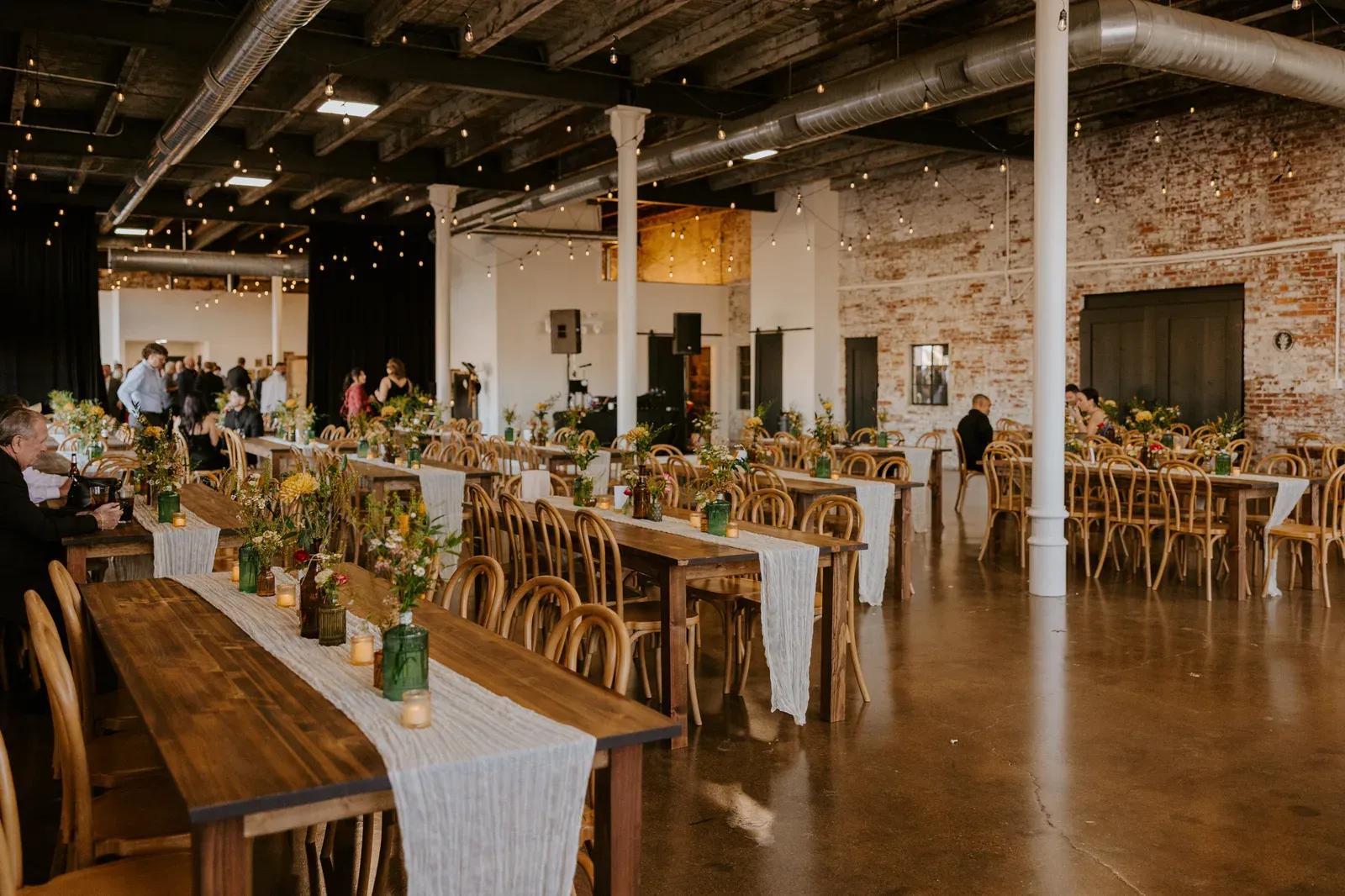
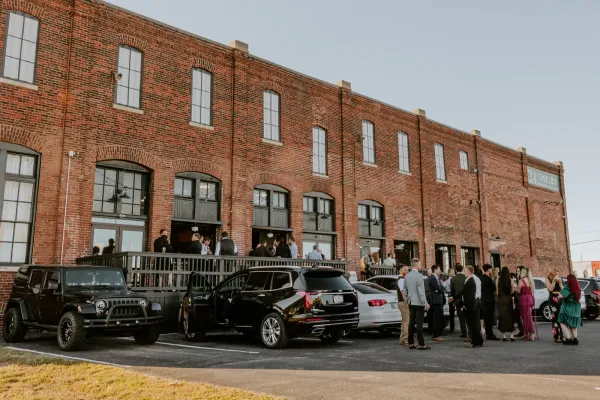
Built in 1898 as the bottling house for the Home Brewing Company, 24 Shelby Street is the only surviving pre-Prohibition brewery building in Indianapolis. Fifteen breweries were listed in the Indianapolis City Directory before Indiana Prohibition took effect on April 2, 1918 (Historic Indianapolis: Home Brewing Company). Every other brewery structure from that era has been demolished. Ours stayed standing because it spent the next century cycling through other industrial uses (steam plant, tire factory, lumber yard, craft brewery) until we renovated it as a wedding venue in 2025.
There are three names worth knowing in this building’s first life. August Hook was brewmaster at the Home Brewing Company in the early 1900s. His son, John A. Hook, opened the first Hook’s Drug Store at the corner of South East and Prospect Streets in October 1900 (Encyclopedia of Indianapolis: Hook’s Drug Stores). By the time the chain was rebranded CVS after the 1997 Revco-CVS merger, Hook’s had been an Indiana retail icon for nearly a century. The father of one of Indiana’s most recognizable retail brands made beer in the building where people now get married.
The second name is Albert Lieber, an early Home Brewing Company leader and the maternal grandfather of Kurt Vonnegut Jr. The third is William P. Jungclaus, the principal owner, whose contracting firm went on to build Circle Tower, the Columbia Club, and the Indiana Repertory Theatre. Architect Hermann Gaul, who designed the brewery complex, had once apprenticed for Louis Sullivan in Chicago.
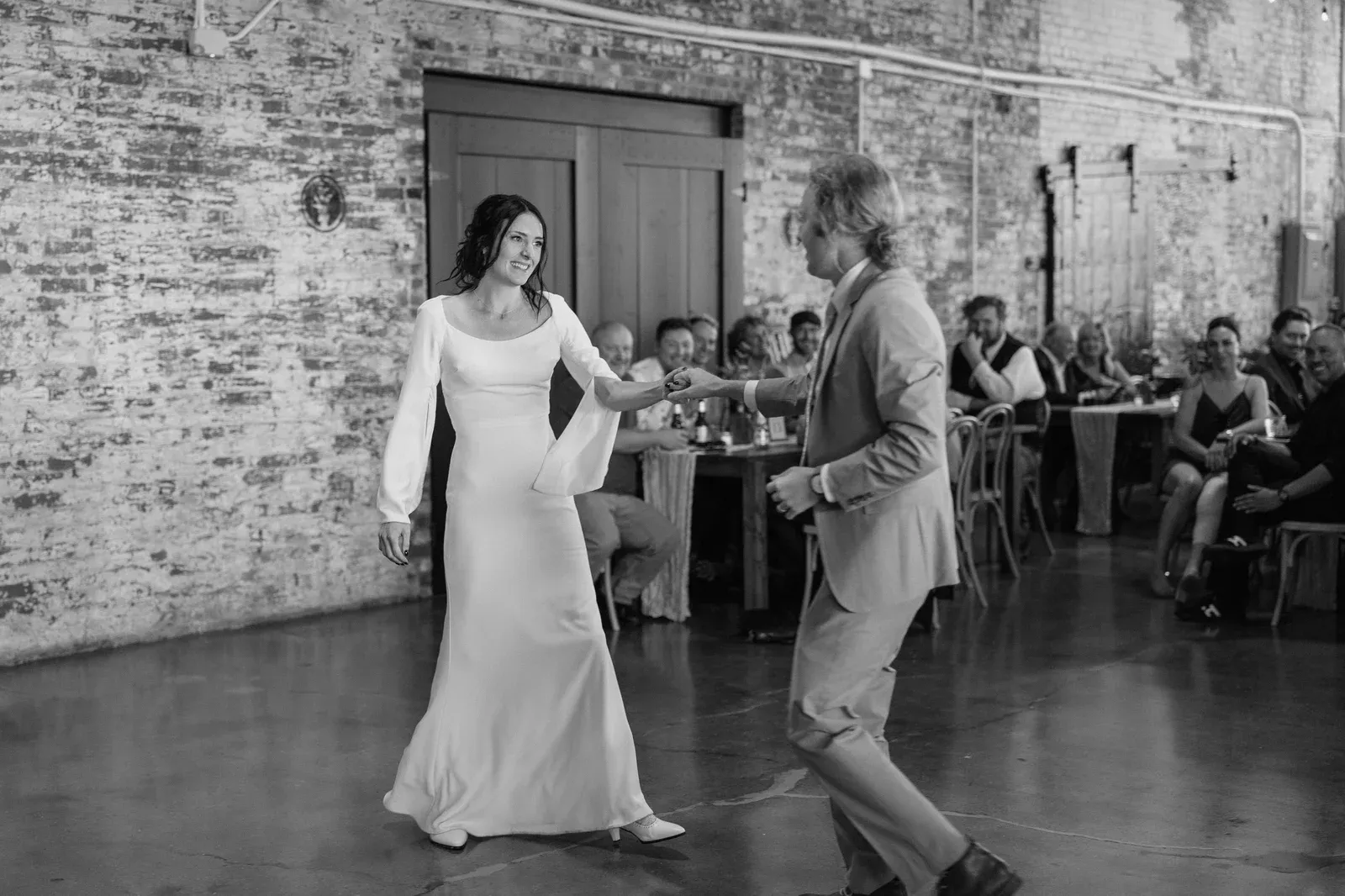 Photo: Clay House Photography
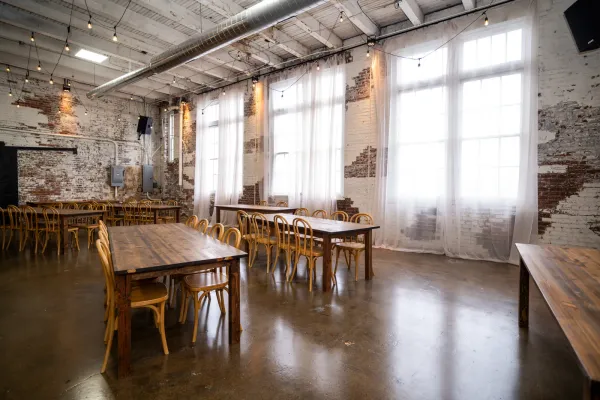
What is preserved: the original brick walls, the oversized windows, the exposed wood-beam ceilings, the structural pillars. What was added: Edison string lights through the main hall, modern roll-up garage doors that open the room to the patio, a fully-stocked bar, the bridal suite. The building is a single floor, fully ADA accessible, up to 250 seated and 300+ standing. Outside caterers welcome with the in-house bar required. Veteran-owned, woman-owned. Full venue and rental detail on our downtown Indianapolis wedding venue page.
According to Sarah Conrad, Managing Partner at 24 Shelby, “Guests don’t care about 90% of the details people stress over. Energy, drinks, and food matter. A beautiful room and a fast bar are what they remember a year later. Build the day around those three things and stop arguing about napkin colors.”
The closest historic-venue comparison nationally is a converted industrial brewery building doing modern weddings. Indianapolis’s version of that is one address. This one. For a venue this small a feature this historically distinct is the entire pitch.
The Athenaeum (1894-1898)
Das Deutsche Haus, the German-American clubhouse built in two phases in 1894 and 1898, designed by Vonnegut and Bohn (the firm of Bernard Vonnegut Sr., great-grandfather of Kurt Vonnegut Jr.). Renamed the Athenaeum in 1918 during the wave of anti-German sentiment of World War I. Today the building houses the Athenaeum Foundation, the Athenaeum Damenverein, and the Rathskeller German restaurant on the ground floor. The Grand Hall ballroom holds up to 500 and the building has a beer garden, a turner ballroom, and several smaller event spaces. In-house catering. Source: athenaeumfoundation.org.
The Athenaeum is the historic ballroom most under-toured by Indianapolis couples. Its German-American history is genuinely unusual in the city’s wedding-venue stock.
Laurel Hall (1916)
A 1916 Tudor Jacobean Revival mansion built as the private residence for Stoughton J. Fletcher, of Fletcher’s Bank. Originally the largest private home in Indiana at 38,000 square feet across 40 rooms. Stained glass windows, ornate plasterwork, paneled walls, six acres of lawns and gardens. Currently operated by the Phi Kappa Psi Foundation. 200 seated indoors with grounds-inclusive events handling more outdoors. Outside caterers permitted alongside in-house options. Source: laurel-hall.org.
Laurel Hall is the Northeast Side suburban-historic option. Couples whose photo references look more like a Pinterest board of estate gardens than a downtown loft tend to land here.
Biltwell Event Center (1922)
A 1922 window and door factory on the west bank of the White River, restored as an event center. Six distinct rooms across roughly 25,000 square feet, including the Grand Hall (600 seated, 750 standing), original exposed brick, hardwood floors, freight elevator, antique fire doors, and an antique bank vault inside one of the spaces. In-house Biltwell Food and Beverage handles catering. Source: biltwelleventcenter.com.
Biltwell is the largest historic-industrial venue in the city. If your headcount is over 350 and you want exposed brick, this is the Indianapolis answer.
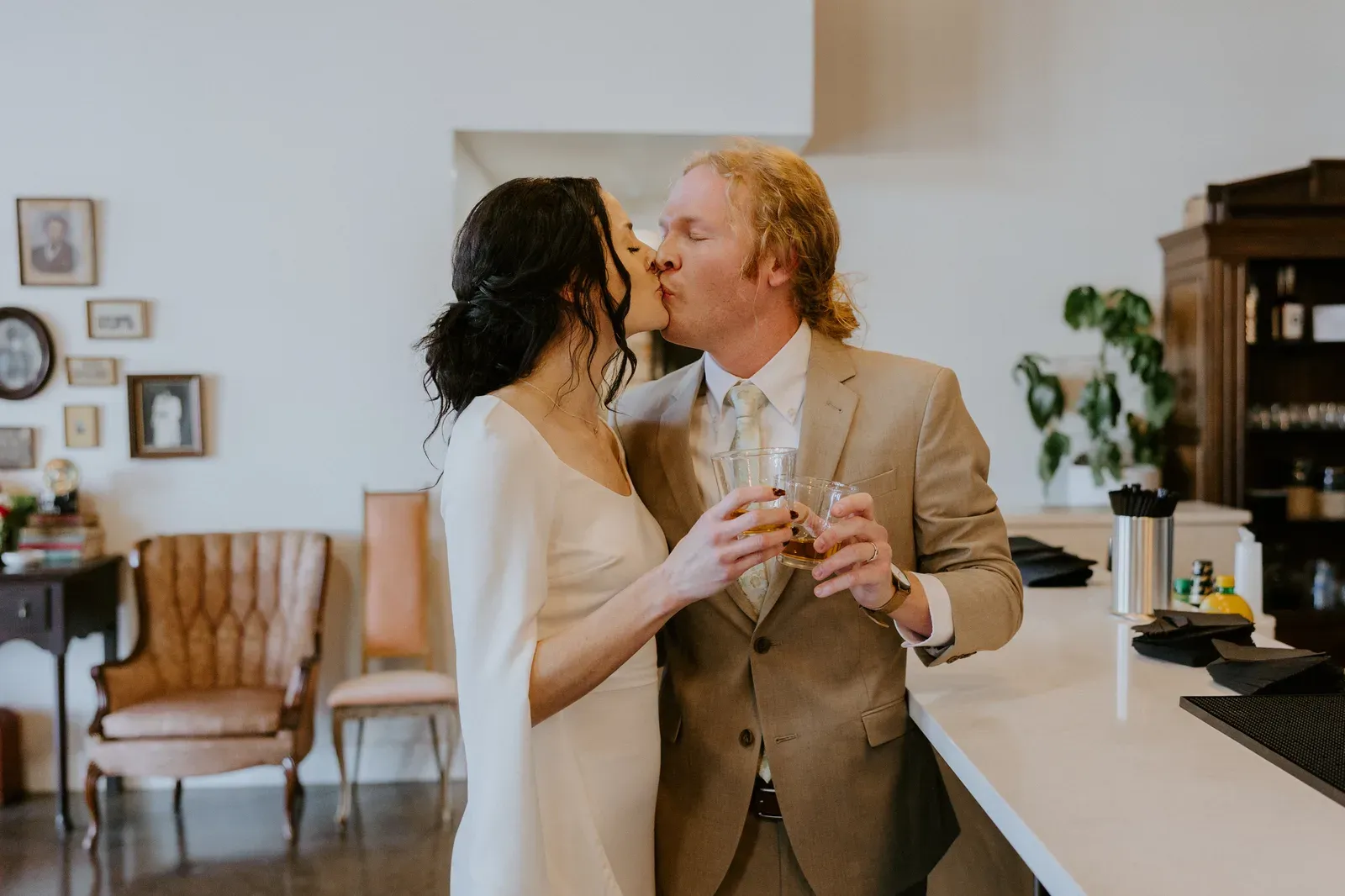 Photo: Clay House Photography
Indiana Roof Ballroom (1927)
The Spanish atmospheric ballroom inside the 1927 Indiana Theatre Building. Painted to look like a Spanish village courtyard at night, with twinkle-lit “stars” overhead, faux balconies, and tiled rooftops on the ballroom walls. Up to 800 seated, 1,000 standing under the dome. In-house catering only. Source: indianaroof.com.
The Roof is the historic ballroom Indianapolis couples eventually find when they realize a hotel ballroom is the only option for their guest count and a hotel ballroom is too generic. Nothing else in the Midwest looks like it.
Madam Walker Legacy Center (1927)
The 1927 headquarters of the Madam C.J. Walker Manufacturing Company, the haircare empire founded by the Black entrepreneur and philanthropist who became one of America’s first self-made woman millionaires. The building anchors Indiana Avenue’s historic Black entertainment district, which once hosted Duke Ellington, Ella Fitzgerald, and Indiana’s own Wes Montgomery. The restored ballroom holds 350 with a built-in stage. National Register listed. Source: madamwalkerlegacycenter.com.
Madam Walker Legacy Center is the only historic Indianapolis wedding venue with this specific cultural and architectural lineage. It is also one of the most beautifully restored Art Deco interiors in the state.
Fountain Square Theatre (1928)
A 1928 atmospheric movie theater (originally 1,500 seats) in the Fountain Square cultural district, restored beginning in 1993. The 40-foot domed ceiling with twinkling stars overhead is the calling card. The renovated ballroom space holds 300 for events with the on-site hotel block (the Fountain Square Theatre Hotel) handling guest rooms. The rooftop bar above handles after-parties. Source: fountainsquaretheatre.com.
Fountain Square is a five-minute drive from 24 Shelby and shares the same neighborhood appeal: walkable to Fountain Square’s bar district, a less corporate alternative to the Mile Square.
What Should You Know Before Booking a Historic Indianapolis Wedding Venue?
Historic does not automatically mean accessible, comfortable, or easy to load in. Before you sign a contract on any building over 75 years old, walk the venue with these five questions in mind.
ADA accessibility. A single-floor venue with no stairs from the parking lot to the ceremony to the bar is rare in this stock. 24 Shelby and Madam Walker Legacy Center are the easiest. Crowne Plaza Union Station and Indiana Landmarks Center handle accessibility well via elevator. The mansions (Propylaeum, Laurel Hall) and the original-architecture theaters get harder. Walk the route from the closest accessible parking spot to every room your wedding will use, with whoever in your wedding party will need to take that route.
HVAC. Some buildings retrofit modern climate control beautifully. Others struggle in July and August, particularly third-floor ballrooms and uninsulated industrial spaces. If your wedding date is between June and September, ask the venue specifically about cooling capacity in the ceremony space at peak afternoon, not “we have AC.”
Load-in restrictions. Protected historic buildings often prohibit drilling into walls, anchoring rigging into ceilings, or hanging anything from original light fixtures. If your florist or DJ has a draping or lighting setup that depends on overhead anchoring, confirm it on the tour.
Photo lighting. Historic venues run heavily on tungsten Edison bulbs, original chandeliers, candlelight, and oversized windows. That is gorgeous. It is also a lower-light environment than most modern banquet halls. Hire a photographer who has shot the building before, or one whose portfolio is heavy on low-light work.
Parking and load-out. A handful of these venues have on-site lots. Most rely on street parking, paid garages, or valet. For older relatives, a planned pickup or rideshare zone matters more than couples typically expect. Confirm before you build the timeline.
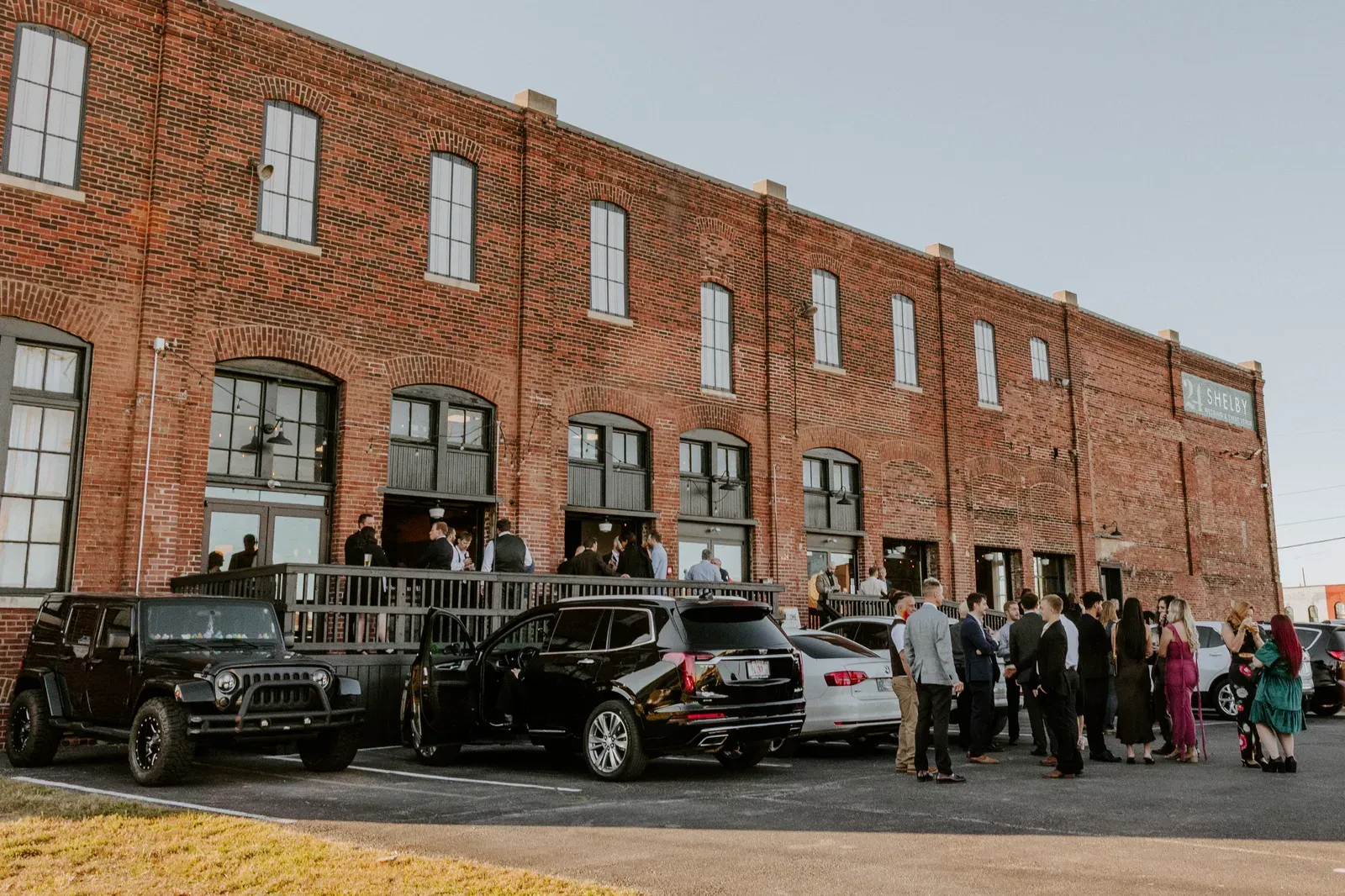 Photo: Clay House Photography
How Do Historic Wedding Venues in Indianapolis Compare on Value?
Historic wedding venues in Indianapolis trend well below the national average for total wedding spend, which is partly a function of the local market and partly a function of how much the buildings themselves contribute to the day. Indianapolis weddings typically come in roughly 26% under the national figure for total wedding cost (The Knot, 2026). Built-in original architecture (brick, beams, stained glass, atmospheric ceilings) replaces a meaningful chunk of decor, draping, and uplighting that bare-ballroom couples have to pay for separately.
For an itemized comparison of what is included versus what is added on, the Indianapolis wedding venue value comparison breaks the city’s most-toured spots down by line item. Couples on a leaner overall budget should also see the smaller-budget Indiana wedding venues guide.
A note on what drives the real spread. Two venues with similar headline rental fees can land thousands apart in real cost once setup, breakdown, mandatory bar service, furniture, parking, and overtime fees are added. 57% of couples face a mandatory venue service fee that roughly doubles their unexpected fees (Zola, 2026). When you ask each historic venue for a quote, ask for it itemized. The full Zola 2026 Wedding Spend Survey is the source.
What’s the Difference Between Historic, Vintage, and Rustic Wedding Venues?
Historic means the building itself is genuinely old, with preserved original architecture. Vintage describes an aesthetic that can be applied to any building, including a brand-new construction styled with 1920s decor. Rustic refers to barn, farm, and converted-agricultural settings, which are often newer constructions designed to look weathered. Indianapolis’s historic stock skews to industrial, ecclesiastical, and Gilded Age mansion buildings, not barns.
The practical difference is what you can claim. A 1928 atmospheric theater with the original star ceiling is a historic venue. A 2018 build with a chandelier and sepia-tone wedding invitations is a vintage-styled venue. They photograph similarly in some shots and very differently in others. Couples shopping specifically for an authentic historic feel benefit from asking the year-built question before any aesthetic conversation.
Are There Historic Wedding Venues for Small Weddings in Indianapolis?
Yes. Most of the venues on this list scale down. The Propylaeum mansion floor handles intimate weddings under 100 cleanly. 24 Shelby has done weddings as small as 30 in the Libations Lounge with the main hall closed off. Indiana Landmarks Center’s smaller rooms (Rapp Family Gallery, Morris-Butler House) work for 50-200. For deeper coverage of intimate Indianapolis wedding venues, the dedicated guide breaks down spaces under 100 specifically.
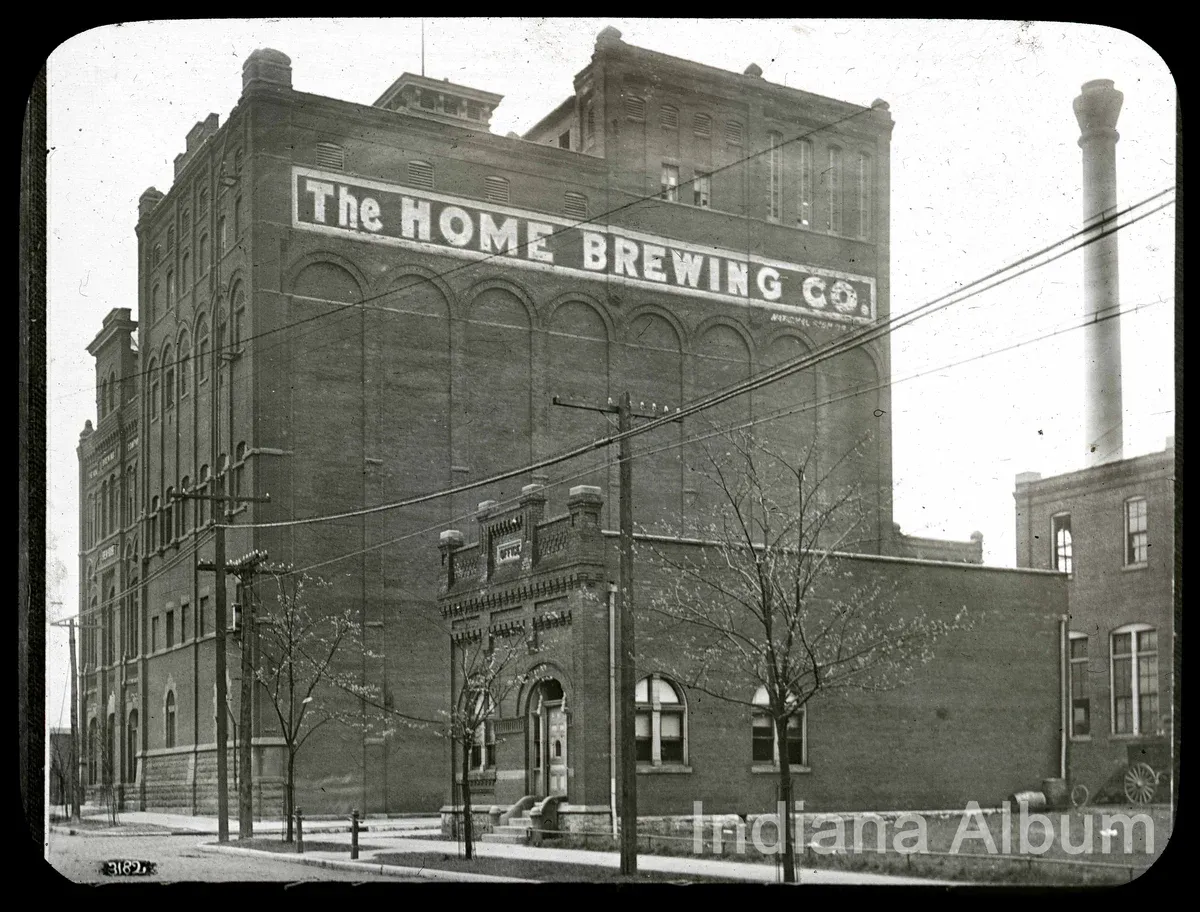 Image: Historic Indianapolis archive (circa 1910)
How Far in Advance Do Historic Indianapolis Wedding Venues Book?
Saturdays in May, June, September, and October book 12-18 months out at the most-toured historic venues including 24 Shelby, Biltwell, Indiana Roof Ballroom, and Crowne Plaza Union Station. Friday and Sunday dates open up 6-9 months in advance. Weekday weddings often have inventory inside 90 days at most venues. Two weekends to plan around either way: the 2026 Indianapolis 500 weekend (May 22-25) and Gen Con (July 30 to August 2). Downtown hotels effectively sell out for both, which makes a downtown wedding with a guest hotel block almost impossible those four weekends.
A Note on This List
The 11 venues above are the historic Indianapolis spots couples shortlist most often, but they are not the only historic options. McGowan Hall (1922 Knights of Columbus building, Old Northside) belongs on a longer list, especially for couples wanting outside caterers and no F&B minimums. Bottleworks Hotel (1931, the former Coca-Cola bottling plant) does smaller boutique-hotel weddings. The Stutz (1911 automobile factory) sits in the historic-industrial overlap. Each of those is in the complete Indianapolis wedding venue guide with the rest of the citywide picture.
If you want to start a venue tour at the only surviving pre-Prohibition brewery building in Indianapolis, reach out and we will get a date on the calendar. The conversation is the easy part.
Frequently Asked Questions
What is the oldest wedding venue building in Indianapolis?
Mavris Arts and Event Center, built in 1883 in the Cole-Noble district, is the oldest building on most Indianapolis historic wedding venue lists. The 1888 Crowne Plaza Indianapolis Downtown Union Station headhouse is a close second. Both are downtown, both predate the 1898 24 Shelby bottling house, and both still operate as wedding venues today.
What is the only surviving pre-Prohibition brewery in Indianapolis?
24 Shelby, the 1898 bottling house of the Home Brewing Company at 24 Shelby Street, is the only surviving pre-Prohibition brewery building in Indianapolis. Fifteen breweries operated in the city before Indiana Prohibition took effect on April 2, 1918. Every other brewery structure from that era has been demolished.
Are historic Indianapolis wedding venues ADA accessible?
Some are, many are not. 24 Shelby is fully ADA accessible on a single floor. Indiana Landmarks Center, Crowne Plaza Union Station, and Madam Walker Legacy Center are accessible with elevators. Multi-floor mansions like the Propylaeum and Laurel Hall have original staircases that complicate guest movement. Always confirm wheelchair routes from the parking lot to the ceremony and reception during the tour.
Do historic Indianapolis wedding venues allow outside caterers?
Most require in-house catering. The exceptions worth knowing are 24 Shelby (outside catering allowed; in-house bar required), McGowan Hall (outside caterers allowed, no food and beverage minimums), and Indiana Landmarks Center (open to its approved caterer list). Biltwell, Mavris, Crowne Plaza Union Station, and Scottish Rite Cathedral run in-house programs with limited or no outside flexibility.
What is the difference between a historic, vintage, and rustic wedding venue?
Historic means the building itself is genuinely old (typically 75+ years) with preserved original architecture. Vintage describes an aesthetic that can be recreated in a brand-new build, like a 2024 venue with 1920s decor. Rustic refers to barn, farm, and converted-agricultural settings, which are often newer constructions designed to look weathered. Indianapolis's historic stock skews to industrial, ecclesiastical, and Gilded Age mansion buildings.
How far in advance do historic Indianapolis wedding venues book?
Saturday weddings in peak season (May, June, September, October) book 12-18 months out at the most-toured historic venues including 24 Shelby, Biltwell, Indiana Roof Ballroom, and Crowne Plaza Union Station. Friday and Sunday dates open up 6-9 months in advance. The 2026 Indianapolis 500 weekend (May 22-25) and Gen Con (July 30 to August 2) effectively close downtown for weddings since hotels sell out for guest blocks.
Which historic Indianapolis venue is best for 150 guests?
150 is the sweet spot for almost every venue on this list. 24 Shelby holds 250 seated, so 150 fits with room to breathe. Indiana Landmarks Center's Cook Theater is sized for around 350 and feels right at 150. Mavris, the Propylaeum mansion floor, and Fountain Square Theatre all comfortably handle 150. The two over-sized venues (Scottish Rite Cathedral, Crowne Plaza Grand Hall) feel cavernous for that count and work better at 300+.
Are there pre-Prohibition buildings in Indianapolis you can get married in?
Yes. 24 Shelby (1898), Mavris (1883), Crowne Plaza Union Station (1888), the Propylaeum mansion (built circa 1890), Indiana Landmarks Center (1891), and the Athenaeum (1894-1898) all predate national Prohibition (1920). Of those, only 24 Shelby was built as part of the brewing industry that Prohibition shut down.
Related Reading
Discovery
Indianapolis Wedding Venues That Allow Outside Catering
Which Indianapolis wedding venues actually allow outside catering, verified from each venue's own site. Catering policies, bar rules, kitchens, and licensing.
Discovery
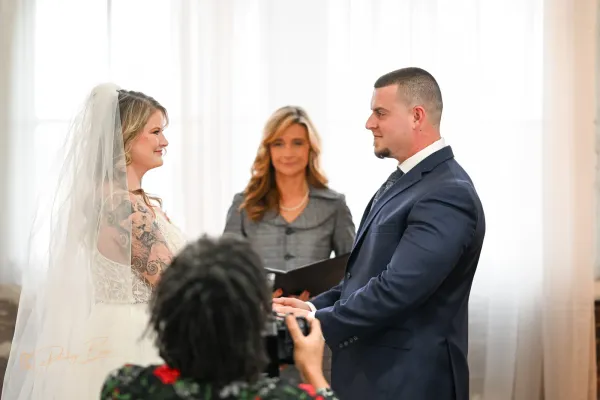
Indoor vs. Outdoor Weddings in Indianapolis: How to Choose
Indoor vs. outdoor wedding venues in Indianapolis, compared by weather risk, decor cost, guest comfort, and rain plan. Written from inside a downtown venue.
Discovery
The Best Banquet Halls in Indianapolis (2026 Guide)
12 of the best banquet halls in Indianapolis for wedding receptions, corporate dinners, galas and milestone celebrations. Capacity and catering confirmed.