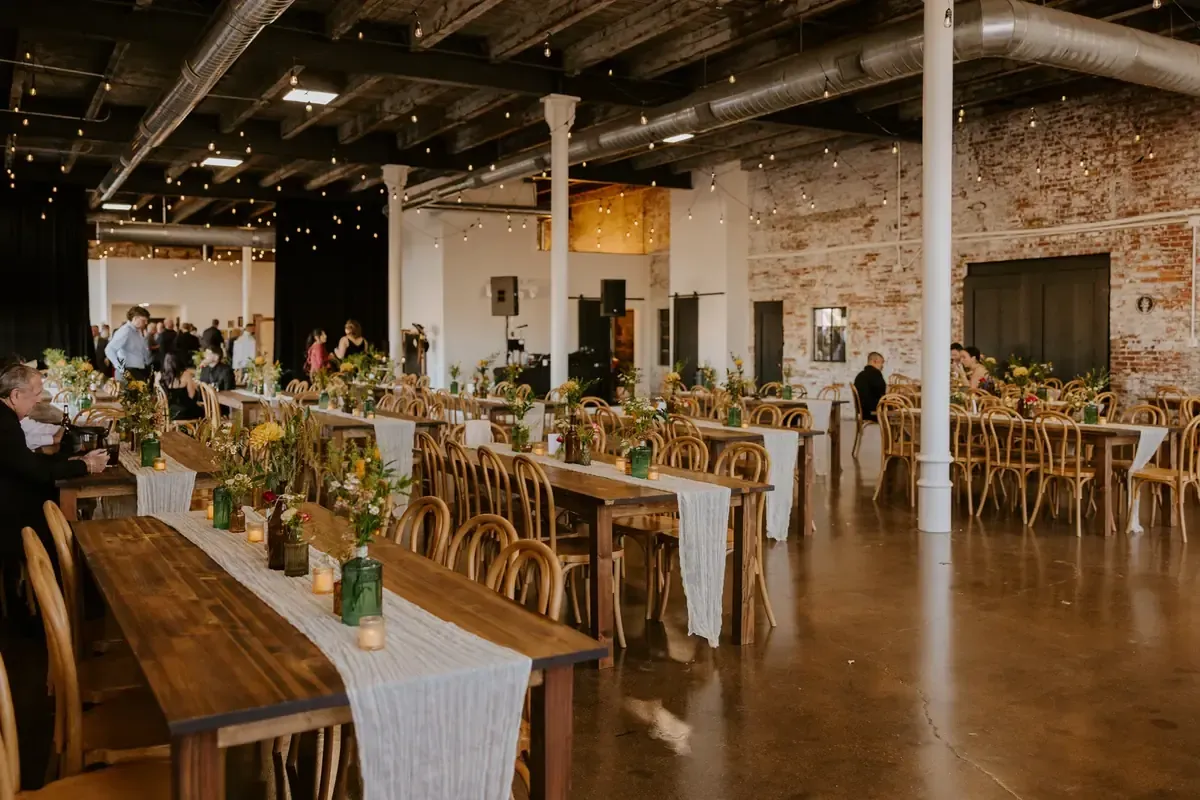
Photo: Clay House Photography

A Roaring Twenties wedding works best inside a building that actually lived through the 1920s, not a ballroom dressed up to fake it. The look most people picture comes from a 2013 film. The real era was Prohibition, jazz, and brick. At 24 Shelby, an 1898 Indianapolis brewery, the period is already in the walls.
I have hosted enough Gatsby-leaning weddings to know where they go wrong, and it is almost always the same place: couples spend a fortune renting a theme onto a blank room when the smarter move is to start in a room that already has the bones. So this is the honest version of the Roaring Twenties wedding guide, period-correct where it counts, and clear about which “Gatsby” details are real history and which ones came from Hollywood.
Gatsby, Art Deco, or 1920s: What Are You Actually Planning?
Most couples use the three terms interchangeably, but they point at slightly different things. A 1920s wedding references the decade itself: Prohibition, jazz, and the social energy of the era. A Gatsby wedding references the glamour and excess of that world. An Art Deco wedding references a design style (geometric chevrons, sunbursts, gold and black) that was named at the 1925 Paris Exposition and peaked in the late 1920s and 1930s.
Here is the part the internet skips. The Great Gatsby is set in 1922, but the black-gold-geometric aesthetic everyone calls “Gatsby” comes mostly from the 2013 Baz Luhrmann film, not Fitzgerald’s novel. In the book, Gatsby’s mansion is a French chateau and the Buchanans live in a Georgian colonial. There is almost no sleek Deco geometry in the text. Knowing this is not pedantic. It frees you up. You are not recreating a documentary. You are borrowing the feeling of a decade and styling it with the design language that arrived a few years later.
Why a Real 1920s Building Beats a Decorated Ballroom
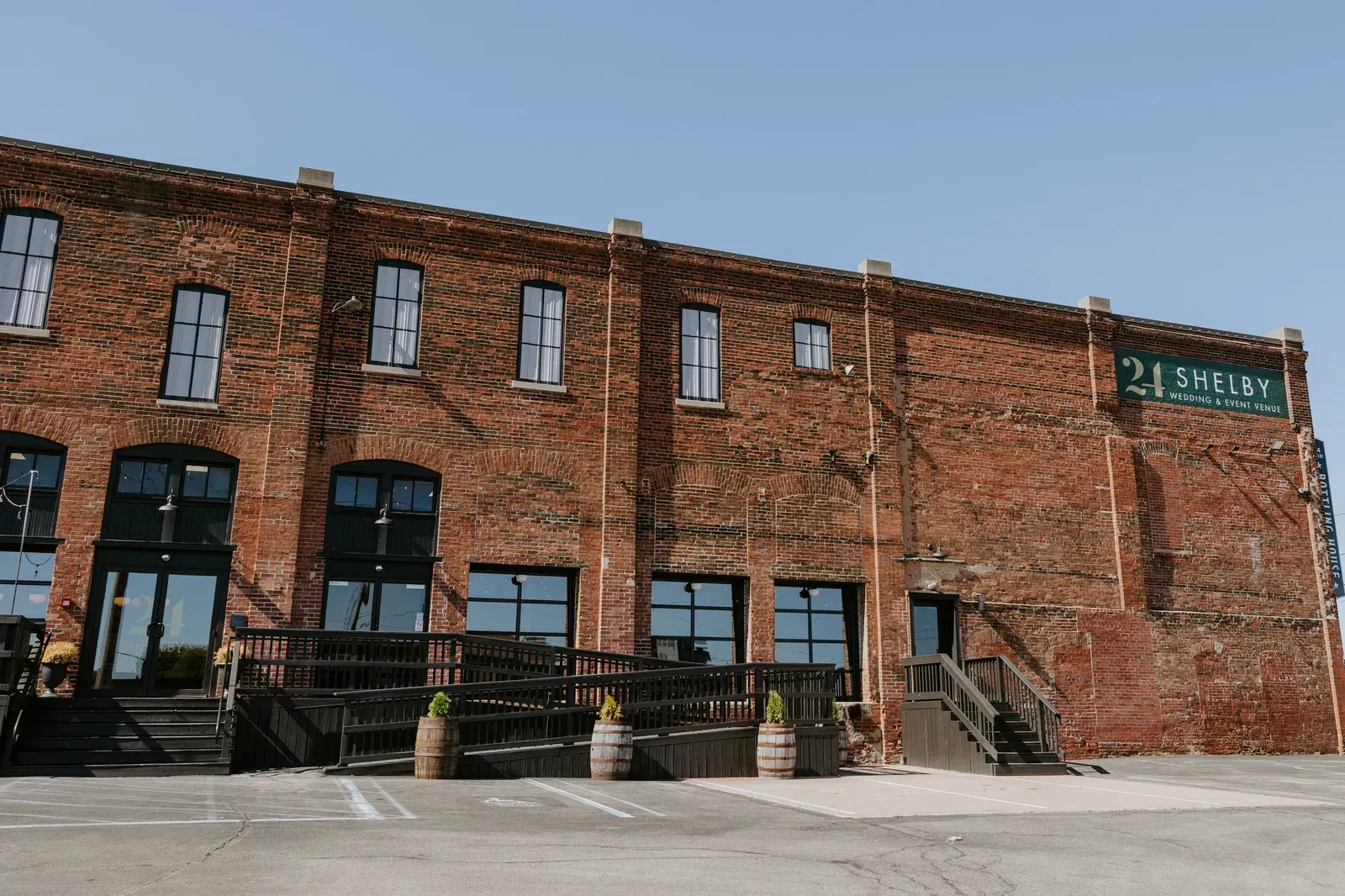
A genuinely old building does the period work that decor only imitates. Exposed brick, timber beams, oversized factory windows, and a real Prohibition-era history give your photographer and your guests something that a rented chandelier never will. The data backs the instinct: bookings for vintage-inspired venues rose 55% year over year, and 78% of couples say a vintage or nostalgic style is shaping their wedding (Zola, 2026).
Couples are not chasing blank canvases. Only 2% of couples surveyed wanted a fully customizable empty space (Zola, 2025). The other 98% want the room to already look like something when they walk in. A 1920s building is the strongest possible version of that.
According to Sarah Conrad, Managing Partner at 24 Shelby, “Guests don’t care about 90% of the details people stress over. They remember the energy, the drinks, and the room. A real 1898 brewery does the 1920s for you, so you spend your money on the band and the bar instead of renting a theme.”
If you are still comparing venue styles, our guide to historic wedding venues in Indianapolis lists every genuinely old building in the city, and the industrial wedding venues guide covers the exposed-brick overlap.
What Colors Define a Roaring Twenties Wedding?
The period-correct palette is black, gold, deep emerald, and champagne, with the option of a jewel-tone accent like sapphire or oxblood. Keep the dark, moody base and let the gold do the glittering. This is not just nostalgia. Planners predict jewel tones and bygone-era glamour will define 2026 decor (The Knot, 2026).
One rule that keeps the whole thing from tipping into costume: put the jewel tones in the room, not on the bride. Emerald, black, and gold belong on the linens, the bridesmaid dresses, and the bar. The bride still wears ivory or champagne. That contrast is what made 1920s society weddings read as elegant rather than theatrical.
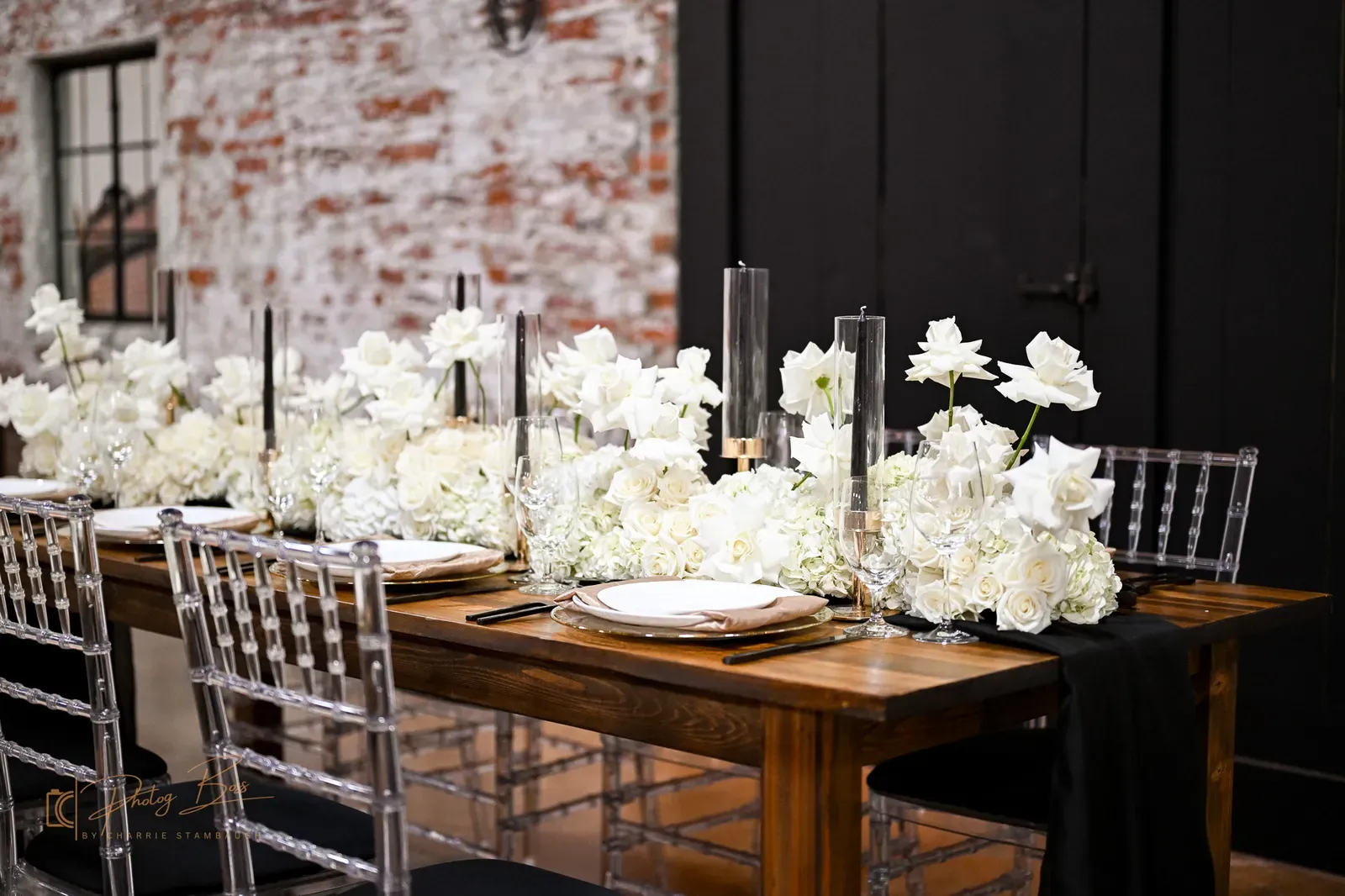 Photo: Photog Boss
What Should the Bride, Groom, and Guests Wear?
The authentic 1920s bridal look is a drop-waist gown (the waistline sits at the hip) in ivory or champagne silk, with subtle geometric beading, a beaded Juliet cap, and a long veil. The Juliet cap, not the elastic headband with a single tall feather, is the real 1920s bridal headpiece. The feather-band look is a modern costume invention. Skip it if you want the photos to age well. Hemlines for weddings stayed ankle to mid-calf, so a true-mini gown reads more party-store than period.
For the groom and groomsmen, the move is black tie (a tuxedo or dinner jacket) or full white tie with tails for an evening wedding, finished with a bow tie, suspenders, a pocket watch, and a boutonniere. One thing to avoid: pinstripe gangster suits and fedoras. Those come from mob movies, not upscale 1920s weddings, and they pull the whole room toward Halloween. For guests, “1920s formal” or “Jazz Age black tie” on the invitation gets you flapper-adjacent dresses and dark suits without anyone showing up in a costume.
How Do You Decorate a Gatsby Wedding Without Looking Tacky?
Decorate by subtraction. Start with a room that already has character, then add a small number of luxe period details: coupe (saucer-shaped) champagne glasses, brass candelabra, geometric or chevron table linens, long pearl strands as runners, and a real gramophone or vintage typewriter as a guestbook station. For flowers, period-correct leans structured and a little dramatic: calla lilies, white roses, orchids, and ferns in tall gold or mercury-glass vessels, not loose garden bundles. Used with restraint, ostrich or peacock feathers work. A wall of them does not.
Is a Gatsby wedding tacky? Only when it tries too hard. The difference between elegant and cheap is almost always the amount of plastic in the room. Here is the contrast I walk couples through:
| Do (reads authentic) | Don’t (reads costume party) |
|---|---|
| Layer a few luxe accents (coupe glasses, candelabra, a gramophone, geometric linens) on top of original brick | Drape every surface in plastic pearls, mylar fringe, and printed “Roaring 20s” banners |
| Dress the bride in an ivory drop-waist gown with a beaded Juliet cap and long veil | Reach for the sequined headband with a single tall feather, a modern costume invention |
| Book a live hot-jazz band playing real 1920s standards on banjo and horns | Stream the 2013 movie soundtrack and call it period |
| Serve a Bee’s Knees and a Southside, the drinks the era actually invented | Lean on gangster pinstripes and fedoras, which are mob-movie costume |
A personal aside: Halloween is my favorite holiday, and I had skulls at my own wedding. So I am the last person who will tell you to play it safe. Make it look like you. Just make it look like you did it on purpose, which usually means fewer, better details, not more.
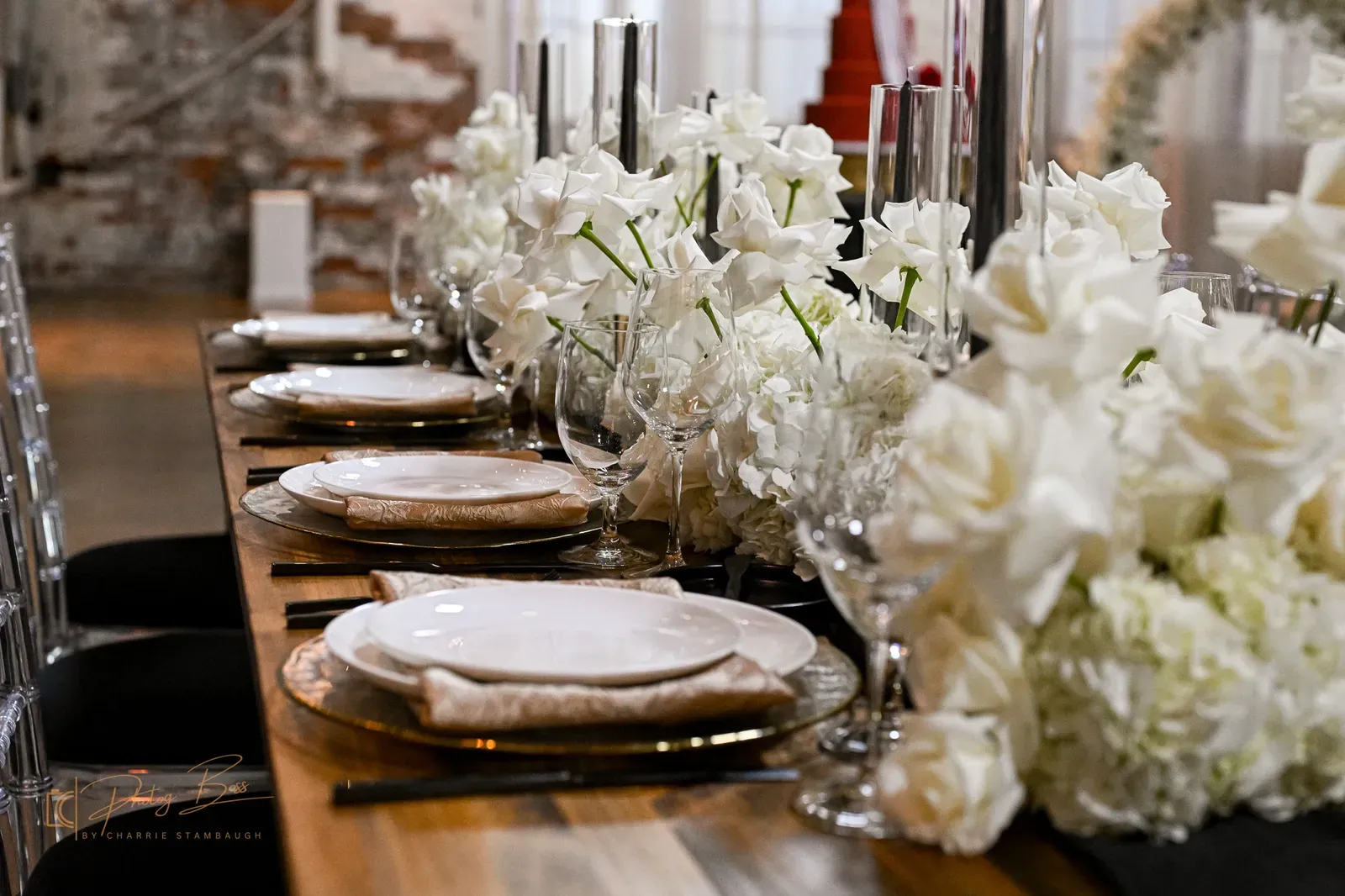 Photo: Photog Boss
What Cocktails and Food Say “1920s”?
A period-correct bar is one of the easiest wins, because the era invented drinks specifically to make rough liquor taste good. Prohibition meant most gin was crude and harsh, so bartenders reached for honey, citrus, and herbs to soften it. That is the actual reason the Bee’s Knees and the Southside exist. Build a short signature list and let your bartenders pour it fast, because a 20-minute bar line ruins a party faster than any decor mistake.
| Cocktail | Why it belongs at a 1920s wedding |
|---|---|
| Bee’s Knees | Gin, lemon, honey. The honey softened rough bootleg gin. “Bee’s knees” was also 1920s slang for the best. |
| Southside | Gin, lemon, mint, sugar. The mint did the same masking job as the honey. The natural partner to the Bee’s Knees. |
| French 75 | Gin, champagne, lemon. Named for a WWI artillery gun and codified in Paris bars in the early 1920s. The toast drink. |
| Sidecar | Cognac, orange liqueur, lemon. Born in the expat hotel-bar scene of the early 1920s. Elegant and unmistakably Jazz Age. |
| Mary Pickford | Rum, pineapple, grenadine, maraschino. Created in Havana around 1922, named for the silent-film star. |
| Old Fashioned | Whiskey, sugar, bitters. Older than all of them, and the one our bar pours most. A period classic that outlived Prohibition. |
For food, the genuinely 1920s upscale menu is an oyster or raw bar, shrimp cocktail, deviled eggs, assorted canapes, and a Waldorf salad (created at the Waldorf-Astoria and a society-menu fixture of the era). A champagne tower built from coupe glasses is both period-accurate and the single best photo moment of the night. Finish with petit fours instead of, or alongside, the cake.
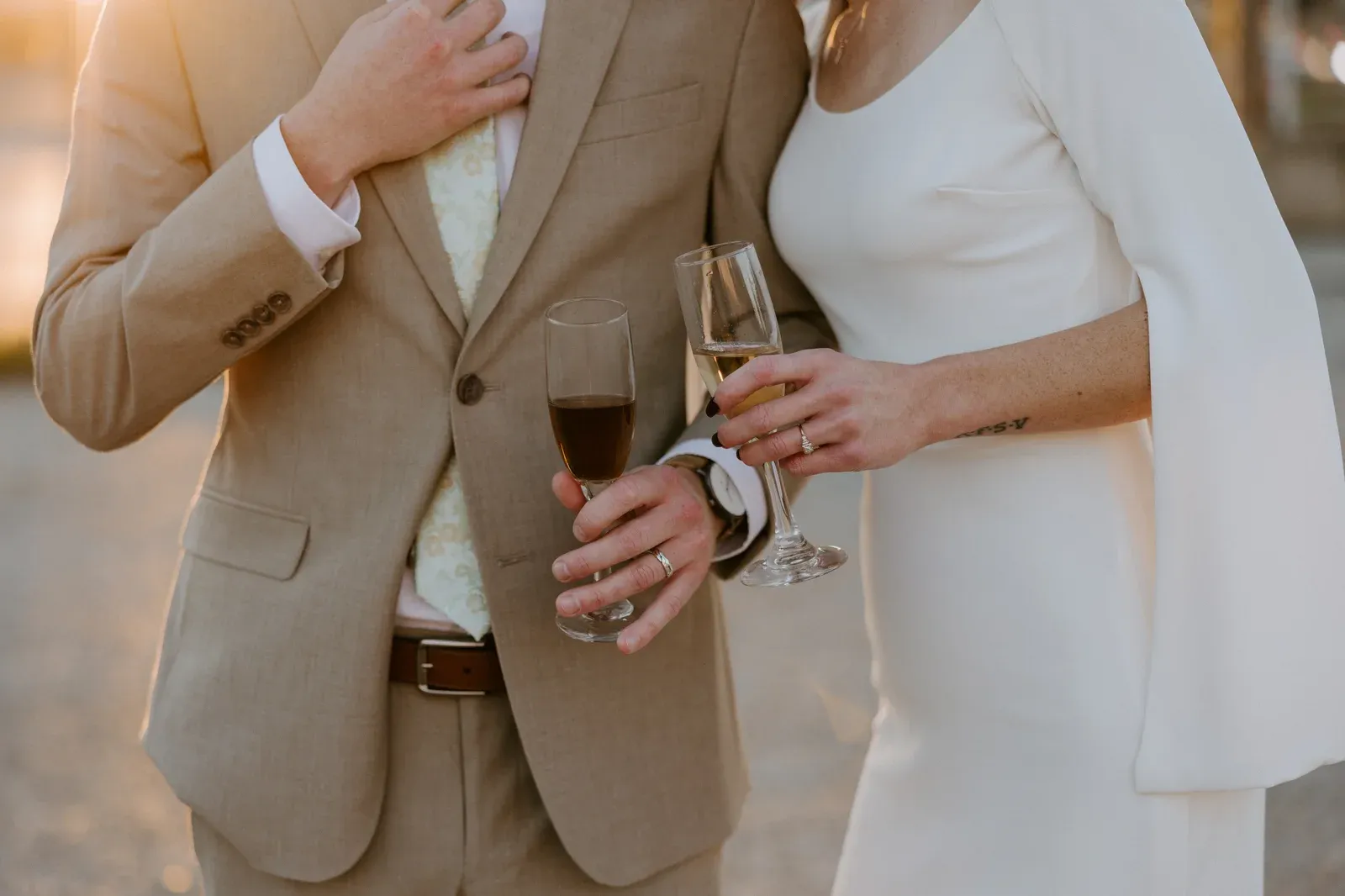 Photo: Clay House Photography
What Music Makes a Wedding Feel Like the Jazz Age?
Live hot jazz, not a movie playlist. The authentic 1920s sound is a small group built on a front line of trumpet or cornet, clarinet, and trombone, backed by banjo, piano, upright bass or tuba, and drums. The banjo over an electric guitar is the single biggest authenticity tell. Real standards to request include “Sweet Georgia Brown,” “Bye Bye Blackbird” (1926), “Ain’t Misbehavin’” (1929), and “Stardust” (1927), which makes a gorgeous first dance. The crowd dances the Charleston, and a short dance lesson during cocktail hour gets everyone moving.
Live band or DJ? A band sells the era best, the banjo and horns are the whole point, but a DJ works if you would rather put the money elsewhere. Just ask them to open on real 1920s and swing records and hold the modern playlist until late, when the dance floor needs a second wind.
Two things worth saying plainly. First, the 2013 Baz Luhrmann soundtrack (the hip-hop and electro-swing version of the 1920s) is not period music. It is great for a teaser reel and wrong for a “historically accurate” claim. Second, the appetite for this is real and growing. Pinterest searches for “jazz club wedding” jumped 1,115% and “speakeasy lounge” rose 225% (Pinterest, 2026).
Indianapolis has a genuine Jazz Age pedigree to draw on, too. Indiana Avenue was the city’s jazz corridor, anchored by the 1927 Madam Walker Theatre, and it produced Wes Montgomery, J.J. Johnson, and Freddie Hubbard. A local jazz trio is not a gimmick here. It is heritage.
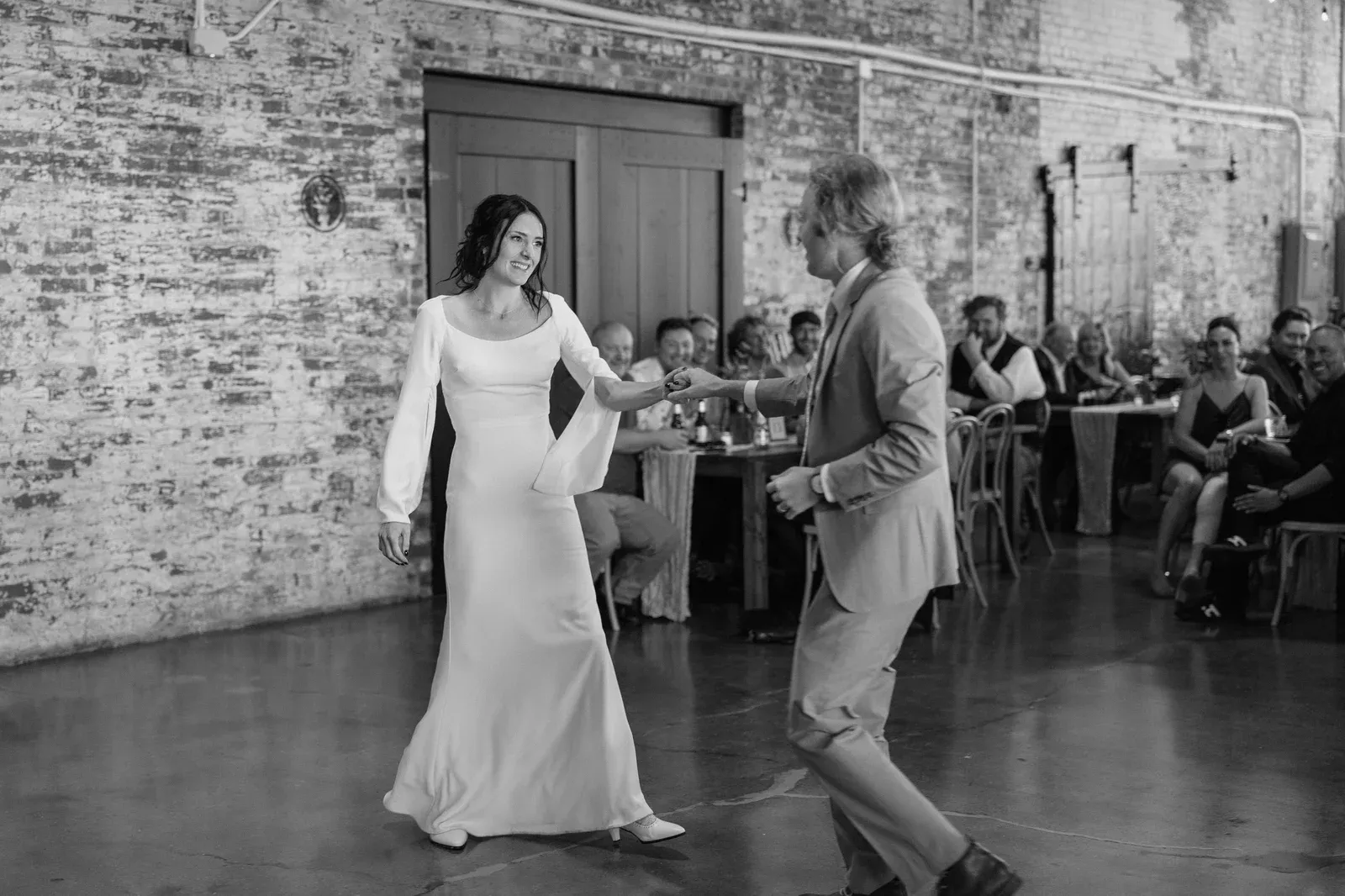 Photo: Clay House Photography
What Makes 24 Shelby an Authentic Roaring Twenties Venue in Indianapolis?
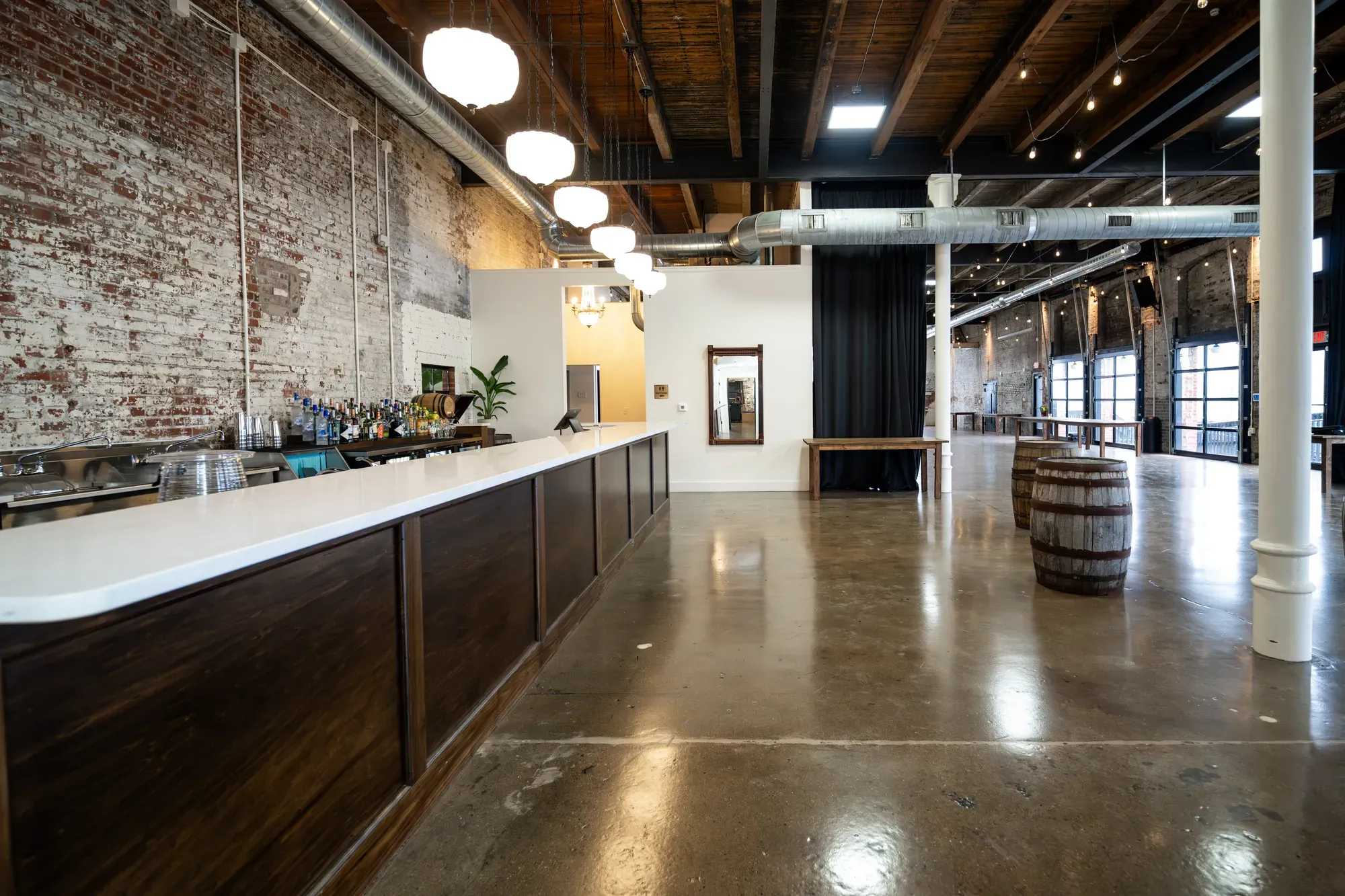
24 Shelby is the 1898 bottling house of the Home Brewing Company, the only surviving pre-Prohibition brewery building in Indianapolis. At its peak the brewery filled up to 60 barrels a day, right up until Indiana went dry on April 2, 1918, nearly two years before national Prohibition (Historic Indianapolis). The company tried to survive on near-beer and malt extract. It did not. Every other pre-Prohibition brewery structure in the city has since been demolished. Ours stayed standing.
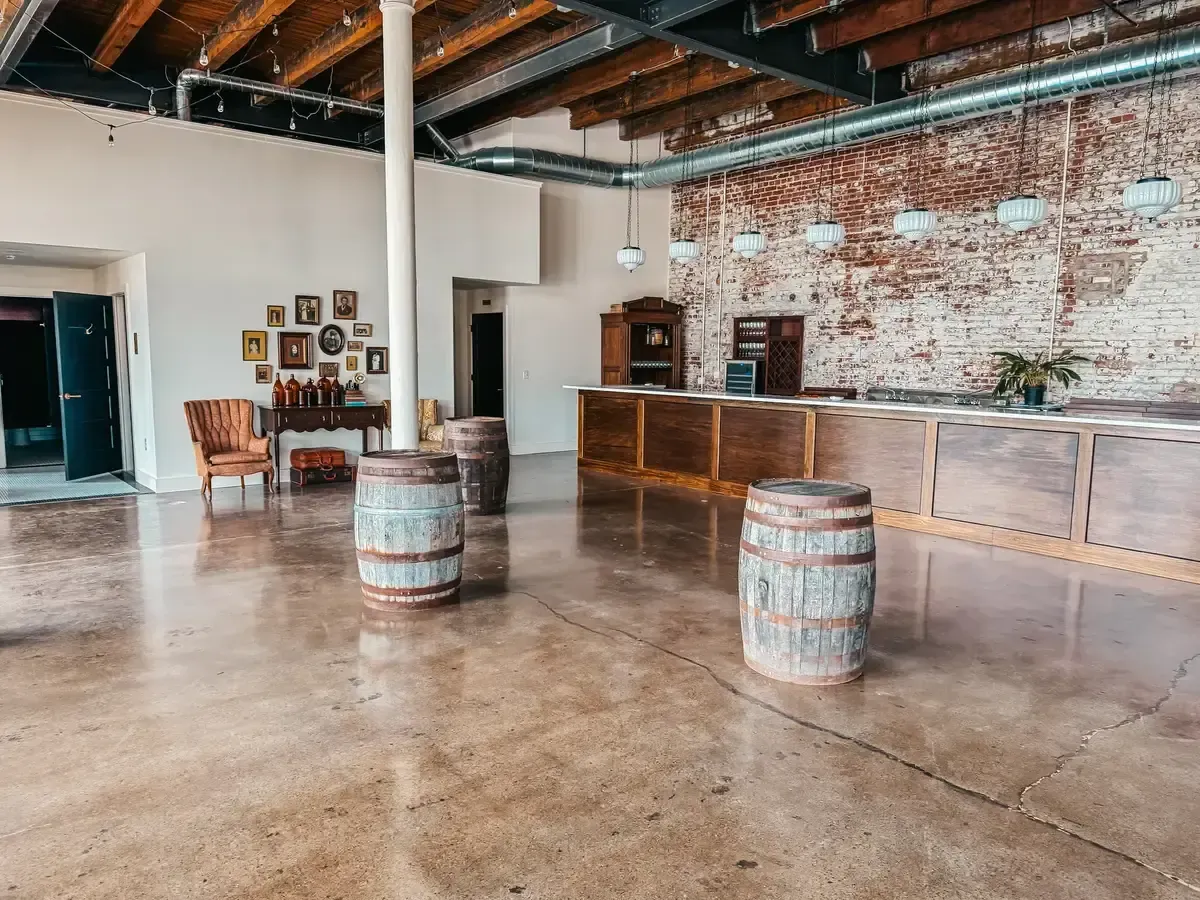
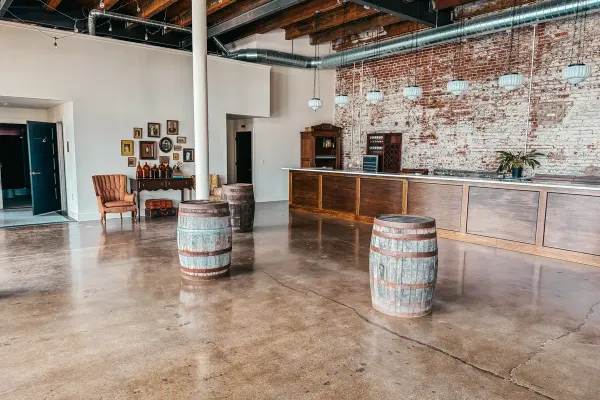
That history is not a marketing line. It is the reason a Roaring Twenties wedding here does not feel like a theme. The Edison Room keeps the original brick, the timber-beam ceiling, and the oversized windows, with Edison string lights added overhead. The Libations Lounge, our fully stocked bar, is the natural spot for a speakeasy-style entrance, a password on the invitation, and the cocktail hour. The Prohibition Patio opens off the main hall through modern garage doors. The building holds up to 250 seated and 300-plus standing, sits on a single ADA-accessible floor, and our in-house bar team pours the night while you bring your own caterer. It is veteran-owned and woman-owned. You can see the rooms on the spaces page and the full rundown on our downtown Indianapolis wedding venue page, and the whole brewery story lives on our our story page.
One honest note on styling. The building is a pre-Prohibition brewery, not an Art Deco building (Deco came a bit later). So if you want true Deco architecture for engagement photos, Indianapolis has real landmarks for that: Circle Tower (1930), the Indiana State Library (1932), and Bottleworks (the 1931 Coca-Cola plant, now a hotel and food hall). Use those for the geometry, and use 24 Shelby for the authentic Jazz Age room. Fountain Square, five minutes away, gives you a vintage rooftop and a 1928 theater for the after-party.
How Do You Plan a Roaring Twenties Wedding?
Here is the whole thing in order, the way I would walk a couple through it on a tour.
- Start with a real period building, not a blank ballroom. The room is your single biggest authenticity decision. Everything else is easier once the bones are right.
- Pick a palette from the era and keep the bride in ivory. Black, gold, deep emerald, and champagne in the room. Ivory or champagne on the bride. Save the jewel tones for the linens and the party.
- Book live hot jazz, not a movie soundtrack. A banjo-and-horns trio, real 1920s standards, and a quick Charleston lesson at cocktail hour.
- Build a short, period-correct bar and let the room do the decor. A Bee’s Knees, a Southside, and a French 75 for toasts will carry the whole night. Add a champagne tower for the photo.
- Add one or two genuine touches, then stop. A gramophone, a speakeasy password at the door, coupe glassware, a beaded Juliet cap. Restraint is what separates a 1920s wedding from a costume party.
If a Roaring Twenties wedding is where your head is, it usually means you care about character over convention, which is the same instinct behind every unique wedding venue in Indianapolis and most of the 2026 Indianapolis wedding trends couples are leaning into right now. The era was about throwing a party that people talked about for years. A real 1898 brewery is a good place to do that. Come tour the building and we will get a date on the calendar.
Frequently Asked Questions
What era is The Great Gatsby set in, and is the aesthetic from the book or the movie?
The Great Gatsby is set in 1922, during Prohibition. The black-gold-geometric look most couples picture comes from the 2013 Baz Luhrmann film, not the novel. Fitzgerald's book describes a French chateau and Georgian mansions, not sleek Art Deco. The style we call Deco was named at the 1925 Paris Exposition, a few years after the story.
What is the difference between an Art Deco wedding and a Gatsby wedding?
A Gatsby wedding references the 1920s Prohibition world of jazz, speakeasies, and champagne. An Art Deco wedding references a design movement (geometric chevrons, sunbursts, gold and black) that peaked in the late 1920s and 1930s. They overlap heavily, so most couples blend them: a Jazz Age feeling dressed in Art Deco patterns.
What cocktails were actually popular in the 1920s?
The Bee's Knees, Southside, French 75, Sidecar, and Mary Pickford are the genuinely 1920s drinks. The Bee's Knees (gin, lemon, honey) and Southside (gin, lemon, mint) used honey and mint to soften rough bootleg gin. The French 75 adds champagne and makes the best toast cocktail. The Old Fashioned predates them all and still pours well.
What did real 1920s weddings actually look like?
Real 1920s brides wore ivory drop-waist gowns with subtle beading, a beaded Juliet cap, and a long veil, not a sequined headband with a feather (that is a modern costume invention). Hemlines stayed ankle to mid-calf for weddings. Receptions leaned on jazz, oyster bars, and champagne. The look was elegant and restrained, not a costume party.
How do you make a Gatsby wedding look classy and not tacky?
Start with a building that already feels like the era, then add only a few genuine accents: coupe glassware, candelabra, geometric linens, a real gramophone. Skip plastic pearls, mylar fringe, gangster pinstripes, and printed 'Roaring 20s' banners. Authenticity is a subtraction discipline. The room supplies the period, and you curate a handful of true details.
What kind of venue is best for a Roaring Twenties wedding?
A real building from the era beats a decorated ballroom every time. Exposed brick, timber beams, and a genuine pre-Prohibition history give photographers and guests something a rented chandelier cannot. A blank room can be styled to imitate the 1920s, but a historic building lets you enhance a period that is already there instead of constructing a fake one.
Is there a real 1920s wedding venue in Indianapolis?
Yes. 24 Shelby is the 1898 bottling house of the Home Brewing Company, the only surviving pre-Prohibition brewery building in Indianapolis. It was a working brewery until Indiana went dry on April 2, 1918. For a couple who wants an authentic Jazz Age room rather than a themed one, it is the closest thing downtown Indianapolis has to the real thing.
Related Reading
Style
Micro Weddings in Indianapolis: The Trend Saving Couples Thousands
A 2026 planning guide for a 50-guest-or-fewer micro wedding in Indianapolis: real venue options, sourced cost data, and a seven-step plan.
Style · Hub
Indianapolis Wedding Trends 2026: What Couples Want
The nine wedding trends actually showing up at Indianapolis weddings in 2026, with sourced data and what is on the way out.