Photo: Photog Boss
Budget
Wedding Venues Under $3,000 in Indiana: Your Complete Guide
 By Sarah Conrad Updated May 21, 2026
 Wedding venues under $3,000 in Indiana exist in real numbers, but they cluster in a handful of categories most couples never shortlist on day one. The same $3,000 books a county park shelter, a community center, a church reception hall, or an off-peak Friday at a downtown boutique. What’s included in each is what actually decides the wedding.
I run a downtown Indianapolis venue, so I get the budget question constantly. Couples come in with a $3,000 venue cap and ask what’s possible. Here’s the honest answer: a lot more than the SERP results suggest, but only if you understand what you are giving up at each tier and where the line items quietly add up after the rental signs.
Can You Actually Get Married in Indiana for Under $3,000?
Yes. Indiana couples regularly hold full ceremonies and small receptions at venues with rentals under $3,000. The catch is that the venue line is usually the smallest piece of the total wedding cost, and the cheapest rentals tend to come bundled with the most add-ons. The Indianapolis metro hosts roughly 11,694 weddings a year (The Wedding Report, 2025), per their Indianapolis market statistics, and most local couples land well below the national average wedding total reported in The Knot’s 2026 Real Weddings Study, per The Knot Worldwide.
What the under-$3,000 tier really represents in Indiana is a venue category choice, not a single price. You aren’t picking between three almost-identical rooms. You are picking between eight or nine very different rental models, each with a different built-in trade.
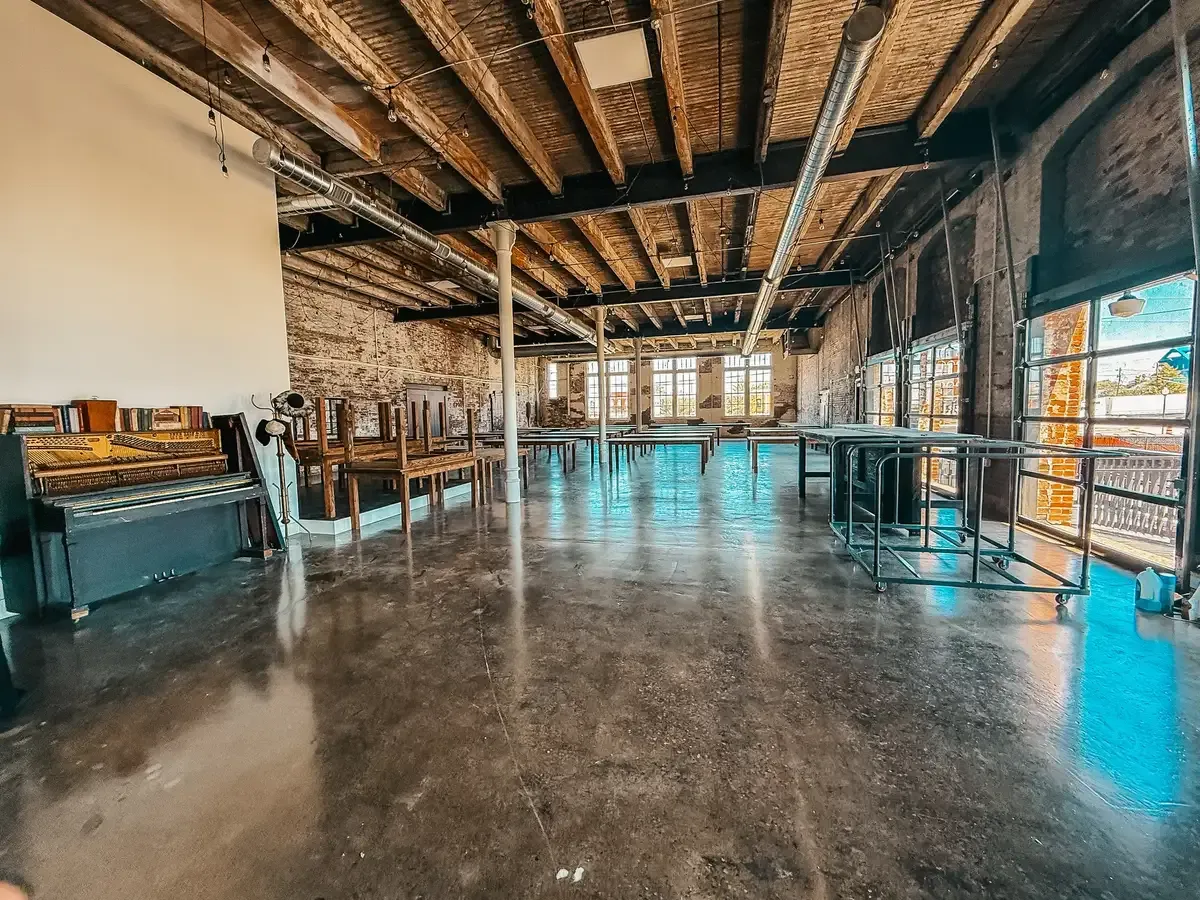 Photo: Photog Boss
The phrase “under $3,000 wedding venue” sets a useful price ceiling but a bad shopping filter. Two venues with the same rental fee can produce two completely different all-in totals depending on what comes with the room. The full pillar guide on how much an Indianapolis wedding actually costs walks the larger budget map. This post drills into the venue line specifically.
What Categories of Indiana Wedding Venues Cost Under $3,000?
Sub-$3,000 Indiana wedding venues sort cleanly into eight categories. Each comes with a typical capacity, a typical inclusion model, and a typical tradeoff. Identify which category your wedding actually fits before you tour anything.
| Category | Typical capacity | What’s usually included | Typical tradeoff |
|---|---|---|---|
| County park shelter or pavilion | 50 to 200 (open-air, tent extension common) | Picnic tables, basic restrooms, parking | Open-air, end time 9-10 PM, alcohol restrictions or permits, weather risk, BYO everything else |
| Community center / township hall | 60 to 150 | Banquet tables and folding chairs, kitchen access, basic AV | BYO catering, bar, linens, decor, coordinator; daytime preferred |
| Church reception hall / fellowship hall | 60 to 200 | Tables, chairs, kitchen, parking, sometimes alcohol-free policy | Often member-discounted, often dry, ceremony space tied to congregation rules |
| Library community room / museum education space | 30 to 100 | Tables, chairs, basic AV, sometimes catering kitchen | Strict end times (often 9 PM), no open flames, limited or no alcohol, capacity caps |
| Restaurant private dining room | 20 to 80 | Tables, chairs, linens, in-house catering and bar bundled | Food and beverage minimum, time blocks tight, decor restricted |
| Off-peak Friday, Sunday, or weekday at a full-service venue | 80 to 300 | Tables, chairs, included lighting, in some cases bar and coordinator | Date inflexibility, off-peak season usually required, Saturday rates much higher |
| Micro-wedding package at a boutique venue | Capped at 30 to 50 | Tables, chairs, lighting, often coordinator and short bar block | Hard guest cap, time block usually 4 to 6 hours, fewer date options |
| Family backyard or private property | 20 to 200 (with tent and rentals) | The land | BYO every single thing including a tent, restrooms, generator, and coordinator |
Sources: each category drawn from public Indiana parks department permit pages, county recreation department rental pages, Indianapolis-area church and synagogue rental pages, and full-service venue Friday/Sunday rate sheets reviewed in 2026. Capacities vary by specific venue.
The two categories Indiana couples most underrate, in my experience: off-peak rates at full-service venues and micro-wedding packages at boutique venues. Both sneak the venue rental into the under-$3,000 zone while keeping the bundled inclusions that the dry-hire categories don’t have. The math on these is almost always the most favorable on the list. More on that below.
 Photo: Clay House Photography
What Do You Give Up at the Sub-$3,000 Venue Tier?
Every under-$3,000 Indiana venue category trades something away in exchange for the lower rental. The tradeoffs are predictable, and the question isn’t whether the budget tier “is worth it.” It’s whether the specific tradeoff your category requires is one your wedding can actually accept.
The most common givebacks at the sub-$3,000 tier:
- End-time flexibility. Parks, libraries, and most community centers close at 9 or 10 PM. Many couples discover this only after they’ve sketched the timeline. A 4 PM ceremony at a park shelter ends the dance floor by 9. If late dancing matters, the category is wrong.
- In-house bar service. Almost no sub-$3,000 venue includes a licensed and insured bartender. You hire one (with liquor liability insurance), supply the alcohol, ice, glassware, and setup, and live with the venue’s permit and serving rules. This is the single most-overlooked add-on at budget venues.
- Tables, chairs, and linens. Banquet folding chairs and basic banquet tables are common. Crossback chairs, farm tables, and linens almost always rent in separately. A 100-guest wedding can stack a meaningful four-figure number on rentals alone before linens.
- Lighting beyond what is installed. Park shelters and community centers don’t have Edison strings, chandeliers, or bistro lights. Evening events need rented lighting and an electrician for installation.
- An on-site coordinator. Dry-hire venues hand you the keys and leave. The couple, a parent, or the maid of honor becomes the point person for vendor arrivals, the timeline, and any day-of issue. The hidden cost is the wedding party’s stress.
- Setup and breakdown labor. At full-service venues, the team sets up before you arrive and breaks down after you leave. At dry-hire venues, that crew is your wedding party at 11 PM on the night of, or it’s a separate hourly bill.
- Capacity above roughly 120 guests. Most under-$3,000 categories cap at 120 or under. Indianapolis weddings average 150 to 160 guests (The Wedding Report, 2025), per their metro statistics, so the typical local guest count exceeds the budget tier’s typical capacity.
- Bridal suite and getting-ready space. A real bridal suite, mirrors, hair and makeup stations, fridge and bar setup, lockers, optical light is almost never bundled at sub-$3,000 venues. Most parks and community centers offer a single multipurpose room, if anything.
- Backup for weather. Outdoor categories (park shelters, family backyards) need a real rain plan, which usually means a tent rental booked weeks in advance and never cancelled.
According to Sarah Conrad, Managing Partner at 24 Shelby, “I tell every budget couple the same thing. Pick the tradeoff first, then pick the venue. If you absolutely need the dance floor open until midnight, the park shelter is the wrong category, full stop. If your guest count is 80 and you don’t drink, the church hall is going to give you more for the rental than any downtown venue ever will. The category is the answer, not the rental fee.”
 Photo: Clay House Photography
How Do You Run the All-In Math on a Budget Indiana Wedding Venue?
The all-in math is the only honest way to compare a sub-$3,000 dry-hire venue against a full-service venue charging more. Industry reporting shows the trap clearly: 74% of 2024 couples ended up over their original budget (Zola, 2025), per their First Look Report, and most of that overrun shows up at the venue line because the rental fee misled the comparison.
Run every venue you tour through this checklist. Same guest count. Same expected meal style. Same bar level.
- Base rental fee for your specific date and time block.
- Catering at the per-person rate your caterer (or the venue’s caterer) quoted.
- Bar staffing: a licensed and insured bartender at typical hourly rates, plus alcohol, mixers, ice, glassware, and serving permit fees.
- Tables and chairs if not bundled. A 100-guest wedding requires roughly a dozen 60-inch round tables or a similar count of 8-foot rectangulars, plus 100+ chairs.
- Linens at standard rental rates per cloth, per napkin.
- Lighting for any evening event without installed fixtures, plus the labor to hang.
- Sound system with mic and speakers, even for ceremony only.
- Setup and breakdown labor if the venue doesn’t include it.
- Event insurance at the level the venue requires (most full-service venues require a million-dollar liability policy from the couple).
- Coordinator or day-of contact, professional or family member.
- Indiana sales tax at 7% on rentals and most line items.
- Service charges and gratuity at venues that include in-house catering or bar (typically 18-25% on the food and beverage subtotal, per The Knot’s hidden venue cost guide).
- Parking and shuttle at venues without on-site parking, or at parks with capacity caps in the lot.
Total each column. The dry-hire venue with the cheapest rental almost never has the cheapest total. That’s the entire reframe.
Wedding industry sources have been calling this out for years. Here Comes the Guide warns directly that an “enticingly-low rental fee” can mislead couples about the true cost of renting a space (Here Comes the Guide). The Knot’s 2025 Real Weddings Study found that 73% of couples ended up at venues that included rentals, 41% included catering, and only 16% ended up at a venue that just covered the space, per their venue cost report. Bare-bones venues are the minority because the math doesn’t favor them.
 Photo: Clay House Photography
When Is Stretching Slightly Above $3,000 the Cheaper Move?
Sometimes it is. Stretching slightly above the $3,000 venue cap into a full-service venue can produce a lower all-in total than staying inside the cap at a dry-hire venue, depending on which inclusions you’d otherwise be renting back in.
The math runs in favor of stretching when:
- Guest count is above 100. The per-head economics of catering, bar, and rentals dominate the venue fee at this scale, and full-service venues’ bundled inclusions compound the savings as guest count rises.
- The wedding includes a real bar. A licensed bartender, liquor liability, and serving permits at a dry-hire venue typically run more than a full-service in-house bar package once total drinks are equivalent.
- The reception runs past 9 PM. Park, library, and museum end times turn into overtime fees or hard cutoffs at the dry-hire tier. Full-service venues already include the time block.
- You want a bridal suite. Renting a hotel suite for the wedding day adds a real line item that bundled bridal suites at full-service venues quietly absorb.
- You don’t have the bandwidth to coordinate vendors yourself. The day-of stress at a dry-hire venue is real. A bundled coordinator at a full-service venue is the cheapest sanity insurance most couples never recognize they’re buying.
This is the honest reframe of the under-$3,000 search. If your hard cap is $3,000 and your guest count is 60, almost any dry-hire category works. If your hard cap is $3,000 and your guest count is 150 with a real bar and an open dance floor, the math almost always says: shift the cap up, shift the day off Saturday, and let the inclusions compress the rest of the budget.
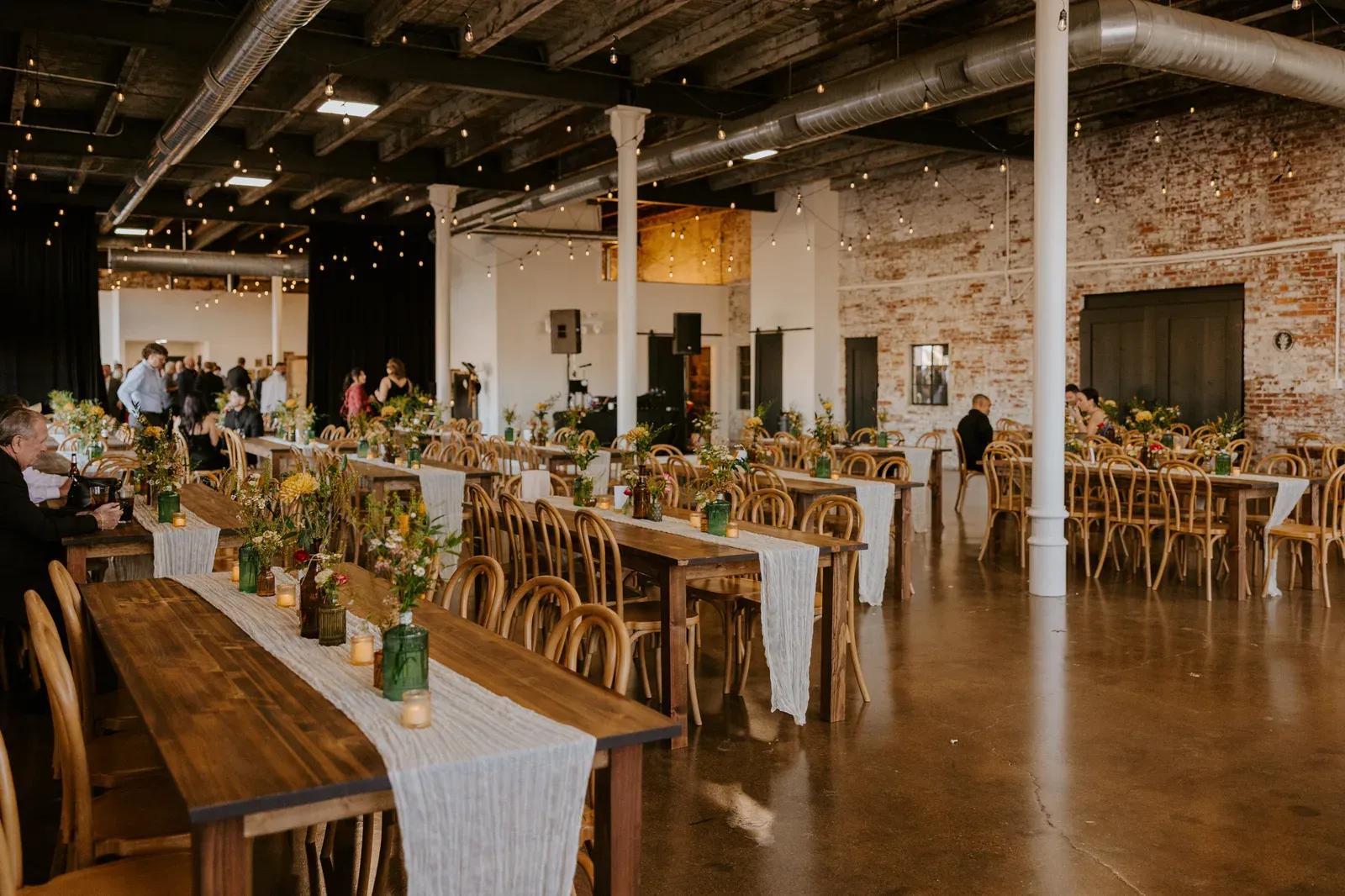
24 Shelby’s wedding rentals start above the $3,000 mark. If your hard cap is $3,000 and the date you want is a peak Saturday, we are not in your category. If your guest count is 80 to 250, you want a real in-house bar, you don’t want to spend Friday loading folding chairs into a U-Haul, and your date can flex to a Friday, Sunday, or off-season Saturday, the all-in math at our venue often lands below the all-in math at a dry-hire community center for the same wedding. We tell couples that honestly on every tour. The venues that compete on rental alone count on couples never running the comparison.
For the broader value picture across Indianapolis, the affordable wedding venues guide walks the inclusions-versus-line-items math across most local venues. For a tighter look at smaller-guest-count weddings specifically, the small wedding venues in Indianapolis guide covers the under-100 picks. For couples drawn to micro-format weddings specifically, see the Indianapolis micro wedding deep dive.
 Photo: Clay House Photography
How Friday, Sunday, and Off-Season Open Up Bigger Venues for the Same Budget
Date flexibility is the most underused budget lever in Indianapolis wedding planning. The exact same room at a full-service venue costs noticeably less on a Friday or Sunday than on a Saturday, and less still in January, February, or early March. Weekday weddings now make up roughly 22% of all weddings nationally per industry surveys cited across The Knot and Zola, and the trend is rising fastest among budget-conscious couples specifically.
The four-step date stretch:
- Shift the day. Friday and Sunday rates run noticeably below Saturday at almost every Indianapolis full-service venue. Weekday rates compress further still.
- Shift the season. May through October is peak. November (excluding holiday weeks), December (excluding holiday weeks), January, February, and early March are off-peak across the local market.
- Avoid Indianapolis blackout weekends. Indy 500 weekend (the last weekend in May), Big Ten Championship weekend, and Indiana Black Expo Summer Celebration in mid-July spike hotel rates and can make guest blocks nearly impossible. Avoid these even when the venue is available.
- Tighten the guest list before the venue. Cutting 20 guests usually saves more on catering and bar than negotiating a venue rental discount, and it widens your venue shortlist because more rooms work for 130 guests than 150. Indianapolis runs above the national average on guest count (150-160 vs. 117 nationally per The Wedding Report, 2025), which makes this the highest-impact lever for local couples.
A Friday in February at a downtown boutique venue often comes in under a Saturday in October at the same venue by a meaningful margin, with all the same inclusions. That’s the same room. Same furniture. Same lighting. Same in-house bar. Different demand. Couples who can flex their date almost always get more venue for less budget than couples locked to a specific Saturday in the peak window.
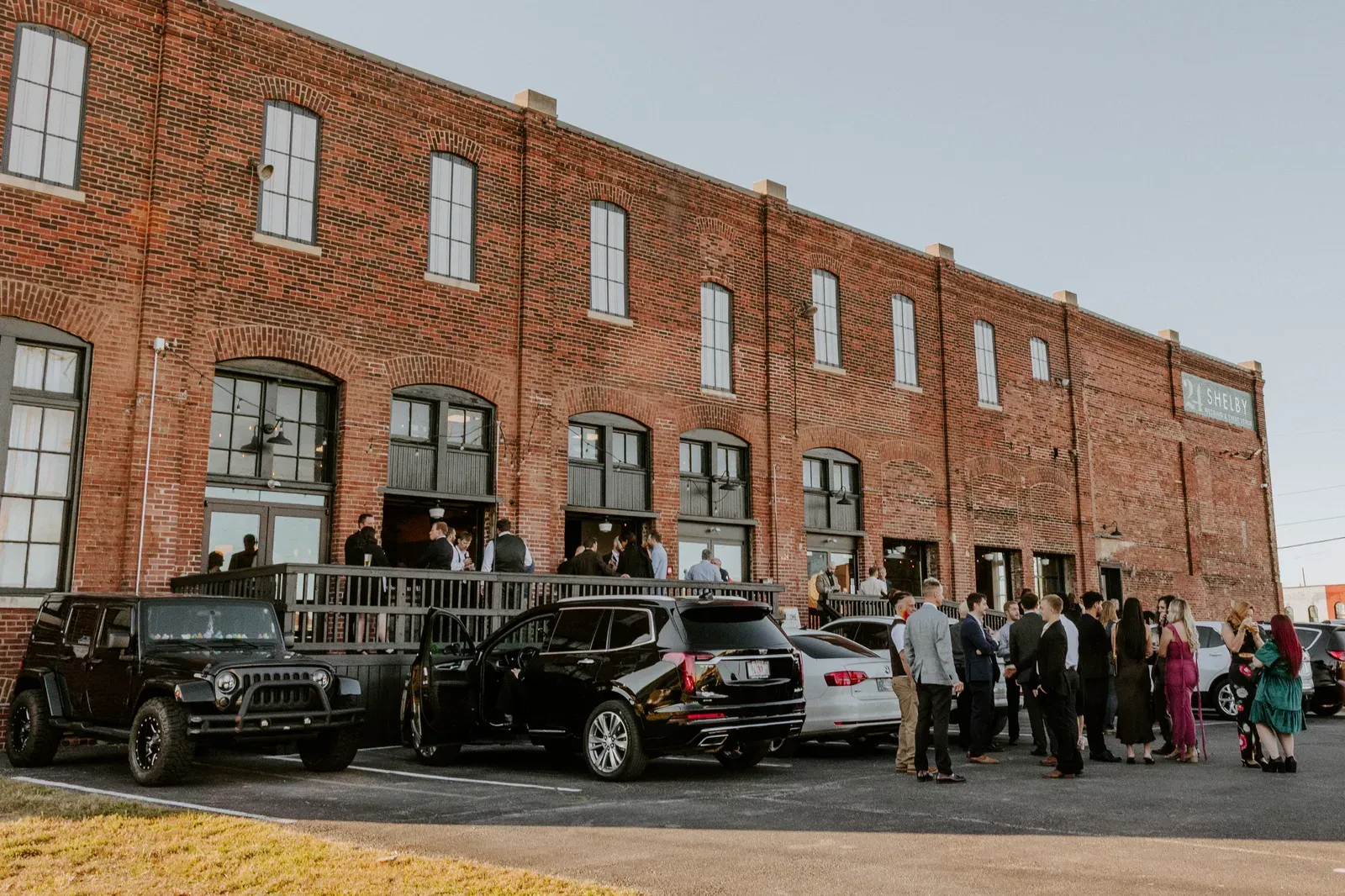 Photo: Clay House Photography
What Should You Ask on Every Budget Indiana Venue Tour?
The all-in spreadsheet only works if you have the answers. Bring this list to every dry-hire and budget tour, and ask in writing.
- What is the total rental fee for my exact date, my exact time block, and my expected guest count?
- What is included in the rental, and what is billed separately? Tables, chairs, linens, lighting, sound, parking, setup, breakdown, security?
- What is the alcohol policy? Can I bring my own? Do I need a licensed bartender? Do I need liquor liability insurance, and at what coverage level?
- What is the latest end time? Is overtime available, and at what rate?
- Is event insurance required? At what coverage limit? Does the venue accept the standard wedding event insurance from a third-party provider, or is theirs required?
- Do I need permits for a ceremony at this location (relevant for parks, public properties, and historic landmarks)?
- Is there an on-site coordinator? If not, do you have a vendor list of trusted day-of coordinators?
- What is your refund and reschedule policy if weather, illness, or family emergency forces a change?
- What is the deposit and the payment schedule?
- What is your accessibility setup? ADA compliant restrooms, single-floor access, parking with accessible spaces?
- Are there sound restrictions, end-time noise ordinances, or amplified music caps?
- What does the venue do if a vendor I bring fails to show up or shows up unprepared?
- Are there any restrictions I need to disclose to vendors in advance? Decor rules, no-flame rules, weight limits, hanging rules?
For the deeper version of these questions across the entire planning process, see the 25 questions to ask on your Indianapolis wedding venue tour. For the line-by-line breakdown of what most full-service venues include versus exclude, see the hidden cost deep dive.
How Couples Actually Land a Sub-$3,000 Venue in Indianapolis
The pattern I see most often with budget-driven Indianapolis couples isn’t “find the cheapest rental.” It’s “find the category whose tradeoff matches your wedding.” Three quick examples from the inquiries we get most weeks.
The 60-guest church-hall couple. They’re not drinking. The reception ends at 8. The church is the parents’ congregation. The hall is essentially free to members. Catering is potluck or a single caterer doing a buffet. The all-in is genuinely small, and the only friction is the day-of coordination, which a parent absorbs. The category fits the wedding. Don’t make this couple feel like they need to upgrade.
The 130-guest weekday-stretch couple. They wanted a Saturday in October at a downtown boutique. The math didn’t work. They flipped to a Sunday in March at the same venue. The rental came in inside the under-$3,000 zone. The inclusions stayed identical. They got the room they wanted on a date their guests could absolutely make work, and the savings funded a better caterer.
The 200-guest backyard couple. They had a family farm. The land was free. They underestimated the tent, restroom, generator, kitchen, and rentals bill by roughly half. By the time they had a final all-in, the venue line was over $3,000 once you counted the rentals as venue cost. The lesson: free land is rarely a free venue.
According to Sarah Conrad, “I’m not going to talk anyone out of a category that fits their wedding. The community center wedding for 80 people is genuinely beautiful when the couple’s friends and family show up to make it work. But the same low-fee community center for 180 people with a real bar at 11 PM is a different thing. That’s not a budget wedding. That’s a wedding that’s about to go over budget. There’s a difference.”
 Photo: Clay House Photography
The Real Math on a Sub-$3,000 Indiana Wedding Venue
The under-$3,000 venue cap is a useful starting point, not a finishing line. Indiana couples who actually pull off budget weddings well do three things consistently. They pick the venue category by tradeoff, not by rental fee. They run the all-in math before they sign anything. They use date flexibility (Friday, Sunday, off-season) to put bigger venues inside the same budget.
The category-first approach is the one almost every venue manager will quietly endorse, including the ones running budget venues. The cheapest venue for you is the one whose tradeoff your wedding doesn’t notice. Pick that, then run the spreadsheet.
If you want to see what a stretched-cap full-service venue actually looks like inside the math, tour 24 Shelby and we’ll quote your specific date, guest count, and meal plan honestly. You can also see the spaces page for the room-by-room breakdown of what’s included, the wedding pricing PDF, and our story for the venue’s history and ownership. The full Indianapolis venue map across capacity, neighborhood, and style sits at the complete Indianapolis wedding venue guide.
The phrase “under $3,000” filters more weddings than it should. The category, the date, and the all-in math are what produce a wedding couples actually remember.
Frequently Asked Questions
Can you have a wedding for under $3,000 in Indiana?
Yes, but the $3,000 cap usually refers to the venue rental, not the full wedding. Indiana couples regularly hold ceremonies and small receptions at county park shelters, community centers, church reception halls, library or museum rooms, and family backyards for a venue fee under $3,000. The full wedding (catering, bar, photography, attire, flowers) almost always exceeds the venue line by several multiples, even on a tight overall budget.
What is the cheapest wedding venue type in Indianapolis?
Public parks, county nature centers, and municipal shelter houses tend to have the lowest rental fees in the Indianapolis metro, with church reception halls and community center event rooms close behind. The catch is that almost none of these include chairs, tables, linens, lighting, bar service, or a coordinator, so the rental fee is only the start of the actual cost. Total your add-ons before you compare, not after.
What's included in a budget Indiana wedding venue rental?
Almost nothing, in most cases. The under-$3,000 tier in Indiana is overwhelmingly dry-hire: you get the room and the time block, and you bring everything else. Tables and chairs, linens, glassware, lighting, sound, decor, and a bar setup with a licensed bartender are usually all separate. A few full-service Indianapolis venues offer their Friday, Sunday, or off-season rates inside the $3,000 zone, and those tend to bundle in furniture and setup.
Are Friday or Sunday weddings really cheaper than Saturday in Indianapolis?
Yes, at almost every full-service Indianapolis venue. Friday and Sunday rates typically sit below Saturday because demand is lower. Weekday weddings (Monday through Thursday) are cheaper still and now make up about 22% of all weddings nationally per industry reporting. Off-season Saturdays in January, February, and early March are also discounted at most venues. Combining a Friday or Sunday with off-season is the most common path to a downtown $3,000 venue rental.
What hidden fees should I watch for at a cheap wedding venue?
The most-missed line items at budget venues are setup and breakdown labor, table and chair rentals, linen rentals, lighting beyond what is installed, a licensed bartender with liquor liability insurance, an event coordinator, security or off-duty officers (required by some parks for evening events with alcohol), event insurance, and Indiana sales tax at 7% on most rentals. Ask each venue for a sample contract, not the brochure, and total every line.
Can I get married at a public park or community center in Indiana?
Yes. Most Indiana county park departments rent shelter houses, lodges, and pavilions for weddings on a permit basis. Community centers, township halls, and neighborhood association rooms are even more flexible. Both categories almost always require you to bring your own chairs (if more are needed), tables, linens, food, and bartender. End times are typically 9 to 10 PM, and parks frequently restrict alcohol or require a special permit for it.
Do budget Indiana venues let you bring your own catering and bar?
Most do. The dry-hire model that defines the under-$3,000 tier is built around couples bringing their own caterer and, where allowed, their own bar setup. The bar piece comes with paperwork: many venues require a licensed and insured bartender, and any venue serving alcohol typically wants proof of liquor liability insurance from whoever is pouring. Plan that line specifically; it is the most-overlooked cost at budget venues.
Is a micro-wedding cheaper than a traditional Indiana wedding?
Usually, because the per-head costs (catering, bar, rentals, favors, even cake) drop with the guest count. Only about 6% of 2025 weddings had fewer than 50 guests per industry surveys, but that 6% is one of the most reliable paths to a lower all-in cost. Several Indianapolis boutique venues offer dedicated micro-wedding packages with capped guest counts and shorter time blocks, often in the under-$3,000 venue range on weekday and off-season dates.
Related Reading
Budget
How to Plan a Budget Wedding in Indiana Without It Feeling Cheap
A budget Indiana wedding doesn't have to feel cheap. The dates, the guest-count math, and the all-inclusive tradeoff that save the most, from inside a venue.
Budget
The Hidden Costs of Wedding Venues Nobody Talks About
Hidden costs of a wedding or event venue, all 23 fees: service charges, tax, overtime, vendor fees, deposits. Why each exists and what to ask before you sign.

Budget
All-Inclusive Wedding Packages in Indianapolis: What's Included (2026)
All-inclusive wedding packages in Indianapolis come in 3 tiers. What each includes, what's left out, and the 6 questions that make venue quotes comparable.